
Professor Cathy Holt, Centre Co-Director
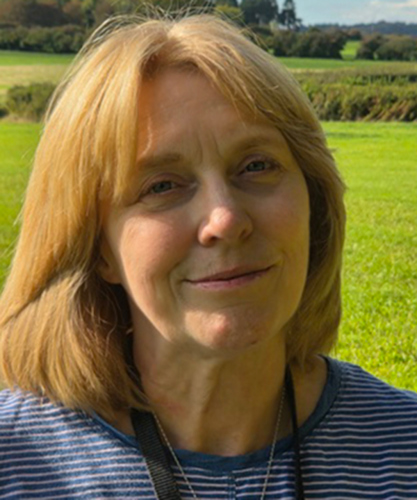
Professor Cathy Holt, Centre Co-Director
Biomechanics and Bioengineering Research Centre, Cardiff University
ORCID: 0000-0002-0428-8078
“I am a Professor of Biomechanics and Orthopaedic Engineering, Director of the Musculoskeletal Biomechanics Research Facility, and co-founder of the Centre."
“The discoveries we are making are building and improving tools to capture the measurements we want to make. With these tools, we can improve our understanding of how people with osteoarthritis move and potentially help improve their treatment in the future."
Areas of professional expertise
- Director of Biomechanics Research, University of Cardiff
- Her research focuses on 3D motion analysis, orthopaedic biomechanics and functional classification of joint disease and surgical intervention.
- Working with interdisciplinary teams across several Schools, she has attracted over £25M in external support for research,
Qualifications and credentials
- Chartered Engineer (CEng), Institution of Mechanical Engineers
- Fellow of the Institution of Mechanical Engineers (FIMechE)
- Fellow of the Learned Society of Wales (FLSW)
- Fellow of the International Orthopaedic Research Societies
Research and publications
Elliott, M. et al., 2023. A prototype database platform for integrating and sharing biomechanics datasets relating to knee osteoarthritis. Presented at: British Orthopaedic Research Society 2023 (hosted Cambridge, England, 25026 September 2023) 25-26 September 2023. Vol. 105-B.Orthopaedic Proceedings Vol. Supp 1. , pp.34-34.
How has your research helped to push forward the field?
“The discoveries we are making are building and improving tools to capture the measurements we want to make. With these tools, we can improve our understanding of how people with osteoarthritis move and potentially help improve their treatment in the future.
For example, we have gathered longitudinal information from people having high tibial osteotomy (HTO) surgery since 2010. Surgeons have performed HTO to help people with knee osteoarthritis since the early 2000s. However, it was only in 2020 that we combined our data with computer models to demonstrate that this surgery does work – it changes the knee loading how it is meant to. This reassures clinicians and patients that HTO is an effective surgery.”
What are you working on next?
"We’ve recently been awarded funding to do more exciting research. One to combine motion capture with video X-ray and MRI, to build world-first and real-time recordings of how our joints, muscles and tissues interact during activities of daily living. And another with Imperial College London to investigate knee instability, a major cause for joint replacements to fail following knee replacement. We plan to build a pipeline of engineering tools that can help us understand why instability happens and design new implants that perform better. We might be able to use our findings to inform standards agencies and improve implant testing in the future."
What has contributed to the centre's success?
"The quality and tenacity of our academics and researchers who work across disciplines, which is very challenging. The centre has trained physiotherapists and clinicians to do clinical research. Consistent funding from the Centre has allowed us to run longer studies on patients to record the patient journey, collect valuable samples, and develop tools that are being used by other researchers around the world."
Affiliations
- Director of Biomechanics Research | Cardiff University
- Biomedical Engineering Research Group, School of Engineering, Cardiff University
- Fellow of the Learned Society of Wales, the Institution of Mechanical Engineers (IMechE) and the International Orthopaedic Research Societies.