
Back pain
Back pain is a common problem in the UK. Up to 6 in 10 people will have it at some time in their lives. It’s usually nothing serious and can often be managed by staying active. But if it doesn’t go away on its own after a few weeks, you may need to see your GP.
Key facts
|
How your back works
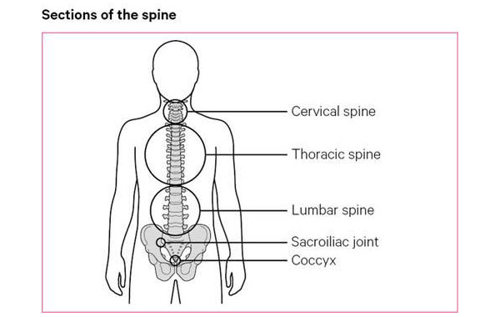
The spine, which is also called the backbone or spinal column, is one of the strongest parts of the body and gives us a great deal of flexibility.
The spinal column is made up of 24 bones called vertebrae, stacked one on top of another, with discs between them. The discs cushion the bones and help the spine move.
Ligaments, which are strong bands of tissue attached to the bones, and muscles around the vertebrae support and stabilise the spine.
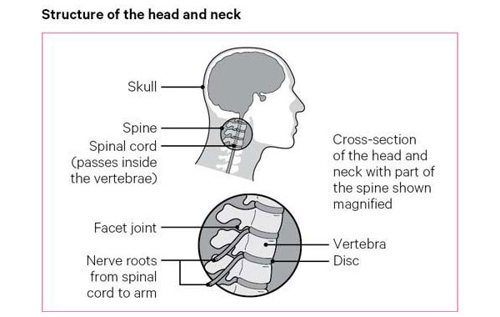
On either side of the spine, all the way up and down it, are small joints called facet joints.
The spinal cord passes inside the vertebrae, which protect it. It connects to the brain at the base of the skull and to the rest of the body through nerves that pass between the vertebrae. These parts of the nerves are called nerve roots (see Figure 2).
Some bones in the tailbone at the bottom of the back are joined together and have no discs in between.
As you grow older, the structures of your spine, such as the joints, discs and ligaments, age as well. The structures remain strong, but it’s usual for your back to get stiffer as you get older.
Causes of back pain
Often back pain doesn’t have one simple cause but may be due to 1 or more of the following:
- lack of exercise resulting in stiffening of the spine and weak muscles
- muscle strains or ligament sprains
- poor posture
- inadequate work or home working set up.
Common conditions causing back pain
There are also specific conditions which may be linked with back pain. Some common conditions are:
- Spondylosis – where the discs in the spine become thinner and the spaces between the vertebrae become narrower as we get older. Little pieces of bone may grow, called osteophytes, at the edges of the vertebrae and facet joints. It’s very similar to the changes caused by osteoarthritis.
- Slipped disc – also known as a prolapsed or herniated disc, is when a disc in the back bulges and presses on a nearby nerve, which can cause pain.
- Sciatica and referred leg pain – where a disc in the back bulges and presses on a nerve, squeezing and irritating a nerve root. This causes pain that travels from the back or buttock down the leg towards the foot.
- Spinal stenosis - narrowing of the space around the nerves in the lower spine, which can cause pain in the legs, particularly when walking.
These conditions are usually not serious. But if they get worse or start to affect your everyday life, you should see your GP.
Less common causes of back pain
Other causes of back pain include:
- bone problems such as a fracture – often linked to thinning of the bones in later life, which is known as osteoporosis
- an infection
- a tumour
- inflammation in or around the spine – this can lead to pain, stiffness and swelling, and may be part of a condition called spondyloarthritis.
- Axial spondyloarthritis, a type of spondyloarthritis, mainly affects the spine and can make it less flexible.
When to see a doctor about back pain
Most cases of back pain tend to clear up without the need to see a doctor.
You should see your doctor if your back pain:
- is very bad
- lasts for a long time
- stops you from working or doing the things you enjoy
- affects your everyday activities
- gets worse.
If the pain is causing you major problems and stops you from getting on with normal life and work activities, your doctor will examine you and ask you questions.
These questions will help predict how likely it is that you need further help with your back pain. If you do need further support, your doctor will refer you to physiotherapy for early treatment, to help with your pain and allow you to return to normal activities.
If you’re concerned about the cause of your back pain, it can help to talk openly about any worries with a healthcare professional, as reducing any fear may help speed up your recovery.
How can you tell if back pain is serious?
Very rarely, back pain or pain that travels down the leg is a sign of a serious problem.
If you have any of the following symptoms, you should seek urgent medical attention:
- difficulty controlling or passing pee
- loss of control of your bowels
- numbness around your back passage or your genitals
- weakness in your legs so you find standing difficult
- severe and persistent back pain that gets worse over several weeks
- changes in sexual function, for example, being unable to get an erection.
The above symptoms could potentially be linked to a rare but serious condition that needs urgent medical attention.
How is back pain diagnosed?
Doctors often start with a watch-and-wait approach when diagnosing back pain. This is because most back pain improves on its own within a few weeks.
Your GP will talk to you about your symptoms and may examine your back. Most back problems can be diagnosed in this way, and you usually won’t need any tests.
Diagnostic tests
You may be sent for some type of scan if:
- you’ve had an injury to your back, for example after a bad fall
- your doctor suspects that there may be an underlying cause for your pain
- the pain has lasted for an unusually long time.
X-rays are rarely used for back pain because many causes are related to soft tissues, such as muscles and ligaments, which do not show up on an X-ray.
Sometimes, even after careful assessment and tests, it may not be possible to find a clear cause for your back pain.
How to manage back pain
Exercise for back pain
Staying active is the most important way you can help yourself if you have back pain. It keeps the muscles around the spine strong, provides more support to the bones and joints and takes the pressure off them. The more you move, the more the back will keep its natural range of movement.
Regular exercise leads to shorter and less frequent episodes of back pain. It also releases chemicals called endorphins, which are the body’s natural painkillers. These improve pain and make you feel happier.
It’s better to choose a form of exercise that you enjoy as you’re more likely to stick to it. Some of the best exercises for back pain include:
- swimming
- walking
- yoga
- Pilates
- going to the gym.
Exercise might make your back feel a bit sore at first, but this doesn’t usually mean you’re harming your back – so don’t let it put you off. If you're getting back to exercise, start off gently and gradually increase the amount of exercise you do. Regular and small episodes of exercise are a good way to start and then each day try to do a little bit more.
Try taking some painkillers before exercising. Over time, your back will get stronger and more flexible, and this should reduce pain.
If you stop being active for a long time, the muscles in your back become weak and you become less fit, and this can make your back pain worse. Not moving can make your back stiffer and more painful.
Painkillers for back pain
Simple painkillers can help you reduce symptoms and allow you to continue with your everyday activities.
- painkillers like paracetamol
- non-steroidal anti-inflammatory drugs (NSAIDs)
- anti-inflammatory creams or gels
You should use them as and when you need them but it’s best to take them before the pain becomes very bad.
You can use painkillers and NSAIDs for a short course of treatment of about a week to 10 days. If they’ve not helped after this time, then they’re unlikely to. However, if they do help but the pain returns when you stop taking them, you could try another short course.
Check with a pharmacist or doctor before using more than one NSAID.
If you have any questions or concerns about what drugs you can take and the dosage, talk to a doctor or a pharmacist.
Heat and ice packs for back pain
Applying a heat pack to the affected area can ease pain and stiffness. You can use a reusable heat pad which you can buy from chemists and sports shops, a microwavable wheat bag or a hot-water bottle.
- A warm bath or hot shower can have a similar soothing effect.
- An ice pack bought from a chemist, or even just a bag of frozen peas, can also be helpful.
- You may find that alternating between heat and ice therapy throughout a day or week can help.
- You could experiment with hot and cold packs to find what works best for you.
Make sure you protect your skin from direct contact with heat or ice packs to avoid burns or irritation of your skin. A tea towel over the heat or ice pack is one way to do that. Read the instructions carefully if you have bought a heat or ice therapy product. Applying ice or heat for about 15 to 20 minutes at a time is normally enough.
Posture
Try to maintain good posture when sitting at home, at work or in the car. Staying in awkward positions or in the same position may increase your pain or recovery time. Try not to stay in the same position for too long.
Complementary treatments for back pain
There are many different complementary treatments that are believed to help with pain relief, and some people do feel better when they use them.
- Acupuncture – a technique that is thought to change or divert painful sensations sent to the brain from painful tissues. It may also stimulate the body’s own pain-relieving hormones, known as endorphins.
- Massage - a manual technique for back pain which uses rhythmic strokes, kneading or tapping actions to move the muscles and soft tissue of the body. Massage can reduce anxiety and stress levels, ease muscular tension and fatigue, and improve circulation, which all work to reduce pain levels.
However, these treatments aren’t generally recommended for use on the NHS because there’s limited evidence that they help with back pain.
Lifting correctly
Learning to lift correctly may help to prevent further episodes of back pain.
- Bend your knees when lifting and allow your spine to move as necessary, without twisting it.
- When doing tasks like carrying shopping, try and use both hands. Keeping the weight close to your body also helps.
- If you’re wearing a backpack, use both straps to spread the weight.
Avoid lifting anything that is too heavy for you, or which is large and an awkward shape. Always ask for help if you need it.
Diet and nutrition
There are no special diets that have been shown to either help or prevent back pain.
However, if you’re overweight, you should consider changing your diet and doing some regular exercise to help you lose weight, as this can reduce the strain on your back.
A healthy, balanced diet is recommended for everyone. Aim to limit saturated fat, sugar and salt, and include plenty of fruit, vegetables and water each day.
Staying active and eating a healthy, balanced diet can help you reach and maintain a healthy weight.
If you are planning on losing weight, it is a good idea to speak to your doctor about it first.
Learn more about eating well with back pain. The NHS also has some good resources to help you lose weight.
Pain management programmes
Pain management programmes may help you control your pain and teach you how to live with long-term pain. They’re usually outpatient sessions and involve learning about pain from a physical point of view, but also how it affects your mood and emotional well-being. The sessions will then look at what you can do to overcome difficulties.
Treatment for back pain
Taking some painkillers, staying active and doing some specific exercises are generally the most helpful treatments for people with back pain. However, some people will need further medical treatment.
Therapies for back pain
There are several therapy options available to help manage back pain.
- Physiotherapy – can be useful to improve strength and flexibility. A physiotherapist can also help recommend an exercise programme for you.
- Occupational therapy – can help you if your back pain is causing problems with daily activities such as dressing, washing or driving. An occupational therapist can suggest different ways of doing things to reduce strain.
- Talking therapies – if you’re feeling low or anxious, talking therapies like cognitive behaviour therapy (CBT) may help you manage the emotional impact of back pain.
Medication for back pain
If standard painkillers or NSAIDs aren’t working for you, your doctor may suggest some additional treatments.
- Amitriptyline – is sometimes used at a low dose to treat nerve pain and improve sleep.
- Injections – are sometimes used for back pain or severe sciatica where other treatments have not worked.
Gabapentin and pregabalin are no longer offered for back pain. If you are currently taking them, speak to your doctor about the risks and benefits.
Spinal surgery
Very few people with back pain need an operation.
Sometimes an operation is needed for spinal stenosis or for severe sciatica to free the nerve. This is known as spinal decompression surgery. Most doctors would recommend other measures first, for example medication and physiotherapy.
Urgent surgery may be needed if you lose bladder or bowel control or the use of your legs. If this happens, seek urgent medical help via A&E. This is extremely rare.
Working with back pain
Getting back to work, or staying in work if you can, often helps people recover more quickly from back pain.
It may also make you feel better about yourself, as time off work has been shown to affect people’s mood.
In the past, people were advised to rest in bed. We now realise this does more harm than good and that it’s better to keep moving, even if you need to take some painkillers to allow you to do so.
Many people can return to work within a few days, although the length of time off work varies with the individual and the type of job you do.
You don’t need to wait until your back problem has completely gone. Taking a lot of time off work can sometimes make it harder to return and may lead to longer-term problems, so it’s usually best to get back into your routine as soon as you can.
Getting support from your employer
It’s important to keep in contact with your employer and discuss what can be done to help you return to work. If your work involves heavy lifting or other physically demanding tasks, you may need to do lighter duties or fewer hours for a while.
If you have an occupational health advisor through your job, they can advise on what work you’re able to do safely and arrange any simple adjustments to your work or workplace to help you stay at work.
For roles that involve working at a computer screen, make sure that your chair and desk are at the correct height for you. Your lower back should be well supported, and you should be able to put your feet on the floor. If you can’t, you might need a footrest. You should avoid stretching to reach things like your mouse, keyboard or phone.
Getting other support
Ask for a workplace assessment and tell whoever carries it out about your back pain. Try to take regular breaks and have a stretch and walk around. Maybe set a timer on your phone or computer to remind you to do this at least once an hour.
If you’re having any difficulties travelling to or from work or need an item of equipment, the Government’s Access to Work Scheme might be able to help.
If you’re unable to get back to work after two weeks of absence because of your back pain, you should talk to your GP and employer about arranging physiotherapy or other treatment to get you moving again.
Learn more about managing your back pain at work.
Research and new developments
Arthritis UK is funding research to improve our understanding of the causes of back pain and to develop better treatments. One area of research is looking at how ageing cells contribute to disc degeneration and the pain it can cause. Researchers hope this will lead to new treatments that remove these abnormal cells and slow or prevent further damage to the spine.
We are also supporting research to improve the diagnosis of axial spondyloarthritis. Earlier and more accurate diagnosis could help people access the right treatment sooner and reduce the impact the condition has on their lives.
Learn more about our research.
Frequently asked questions
Is back pain a type of arthritis?
Back pain isn’t usually caused by arthritis. But some types of arthritis can cause back pain. Axial spondyloarthritis (axSpA) is a type of inflammatory arthritis that mainly affects the spine. It can cause long-lasting pain and stiffness, fatigue and inflammation in other areas of the body.
What causes back pain in women?
As well as musculoskeletal issues, women can have back pain for other reasons. Period pain may spread to the back, and conditions affecting the womb or ovaries can also cause back pain. Kidney infections, which are more common in women, can cause pain in the back, usually just under the ribs.
How long should I wait before seeing a doctor about back pain?
You should see your doctor if your back pain hasn’t improved after a few weeks, is getting worse or is affecting your everyday activities.
Seek medical advice sooner if you have other symptoms, such as unexplained weight loss, a lump or swelling in your back, or pain that gets worse when you cough, sneeze or go to the toilet.
How do I know if my back pain needs an X-ray or MRI?
It’s unlikely that you’ll need an X-ray or MRI for your back pain. You may need one if you have had an injury or fall, or your doctor thinks there is an underlying cause for your back pain.
How do I manage lower back pain?
The best way to manage lower back pain is keeping moving. Sticking to your normal routine as much as possible and doing gentle back exercises will help improve your pain gradually over a few weeks. You can also take a short course of painkillers or use heat and ice to reduce pain and relax stiff muscles.
Sources
Back pain - low (without radiculopathy) | Health topics A to Z | CKS | NICE
Overview | Low back pain and sciatica in over 16s: assessment and management | Guidance | NICE
Last review date: August 2026
Next review date: August 2029
You might also be interested in
-
Managing arthritis pain
Pain can be a major symptom of arthritis. Find out about treatments, self-help and how to assess if your pain management is working.
-
Exercises for the back
Learn 12 simple exercises designed to help you with problems and pain affecting your back.
-
Arthritis UK Back Pain Exercise Sheet
-
Back pain information booklet
For further information on back pain download our back pain information booklet.

You can trust our health information
Our information is PIF TICK certified. This means that it’s trusted, evidence-based and accessible.