
Emotions and relationships

How can I look after my emotional wellbeing?
There are many ways you can look after your emotional wellbeing. Why not try some of the tips below?
- Keep up with activities you enjoy, or take up a new one. This could be anything: swimming, gardening, reading, walking, cooking. The list is endless! Read our tips on making gardening easier.
- Stay connected – to family, friends, the local community. If you’re feeling isolated, follow your interests (join a gardening club, book club or singing group, for example). We have local branches and groups all over the UK – many have coffee mornings, activity groups and other social events. There’s something to suit everyone.
- Keep active – many people say their arthritis symptoms lessen if they exercise. Read our information on exercise to find out more.
- Give back – this could be a small gesture, such as giving someone a compliment, or a larger one, such as volunteering at a charity shop or soup kitchen.
Emotions and arthritis symptoms
Mind and body
Because your mind and body are so closely linked, the symptoms of arthritis, and the feelings you get, can influence each other. This can be good or bad, depending on how you look at it.
For example, if you're in pain or can’t do something, it might make you short-tempered or put you in a low mood. On the other hand, feeling positive about finding a solution or focusing on things you can do makes the physical symptoms of arthritis easier to deal with.
Two principles are important in appreciating how we experience pain:
- Each of us reacts to and manages pain differently.
- How we deal with our pain can affect the way we feel it.
A variety of other factors can determine how your body will react chemically to pain and whether your nerves will transmit or block a potentially painful message to your brain. These factors can include anxiety, fatigue and how you responded to pain while growing up. The pain caused by arthritis can be persistent and sometimes severe, but you can work at not letting it dominate your life.
Drugs and your mood
A side effect of some drugs can be mood changes. This can be directly or indirectly – as a knock-on effect – of another side effect, such as insomnia, headaches or dizziness. This, in turn, can cause you to become tired and withdrawn, and could, in the long term, lead to anxiety and depression.
Talk to your doctor or another healthcare professional you trust about the possible drawbacks and benefits of your arthritis medication. It's also important to talk to your GP if you feel your medication is affecting your emotions.
Best arthritis care
Work with your healthcare team to optimise your treatment to the best it can possibly be. Together, you can find the right combination of exercise, therapy and medication. This can be difficult, however, if you lack the confidence or the knowledge to have a meaningful, two-way discussion.
Here are a few suggestions on how to build your confidence in these situations:
- Take someone with you to consultations. Ring our Helpline for advice on the right questions to ask. Write a list of things you want to discuss or tell your doctor.
- Take these with you on the day and tick off each point during your appointment.
- Attend a self-management course or workshop, which can help to build your confidence in the long term.
- Stick to your treatment plan to get the most benefit. If it’s not working for you at any time, talk to your doctor, nurse or therapist about making adjustments. Don’t be afraid to ask questions about your treatment and the alternatives.
Rest and relaxation
When you feel threatened, your body goes into ‘fight or flight’ mode. This stress response releases chemicals that affect your heart, breathing, muscles, nerves, gut and brain.
There are lots of different ways to relax. Some people find that mindfulness helps them. Others find meditation, yoga, or listening to relaxing music beneficial. Another technique you could try is Autogenic Training – this is a relaxation process that addresses the imbalance in mind and body.
Pace yourself. Fatigue can be a big problem for many people with arthritis. Build extra time into your schedule so you can rest between periods of activity, without having to rush.
Sleep is vital
Some people with arthritis struggle to get a good night’s sleep – this can be due to pain, or worrying about the knock-on effects of your condition. Lack of sleep can make your pain worse, leave you grumpy or low, and can affect your concentration.
Stick to a calm routine, with a regular bedtime. Switch off your mobile phone, computer and TV. A comfortable temperature will help you drift off. If it’s not working, ask your GP for advice.
Read more about sleep.
Staying active
You don’t have to go to the gym – staying active is about keeping moving in a way that feels comfortable for you. Being physically active helps to alleviate arthritis symptoms and is the key to staying mobile and staying independent with arthritis.
To find out what’s safe for your joints, have a chat with your doctor, nurse or therapist before you start.

Getting started with exercise
You don’t always need special equipment to exercise, and a lot of things can be done around your home, using apps, YouTube videos and your own furniture. It’s important to be comfortable when you’re active, having the right clothing and footwear, but there are lots of activities you can try that feel right for you.
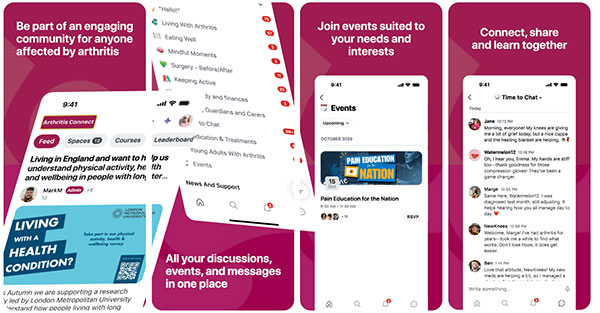
Arthritis Connect: Share your thoughts, tips and advice
So many people don’t understand what it’s like to live with a condition that can have such a huge but hidden impact on your life. But we do. One place you can always find a friendly ear or an answer to a question is our online community forum. Also available on an app for Apple and Android.
Common emotions if you have arthritis
Emotions send us quick, powerful messages about our environment. These then trigger reactions, which often allow us to function effectively in a given situation. Some emotions are automatically signalled – such as happiness, sadness and anger – while others, like guilt or jealousy, are more complex and often have no obvious signals.
One size rarely fits all in any aspect of life. It depends on you and at what stage your arthritis is: whether you’re experiencing the first symptoms, have just been diagnosed, are going through your first flare-up, or have been living with a chronic and relapsing condition for some time.
However, people with arthritis do talk about some common experiences. Hearing the diagnosis can be a shock. Some people deny anything is wrong, and try to ignore it. You might feel scared, or relieved to finally know what’s wrong.
However, there may be a sense that your body cannot be relied upon or trusted anymore, and the feelings of uncertainty can be hard to adjust to.
At any stage, many people feel angry and frustrated. It’s natural to ask “why me?” Anxiety is also common. You may be scared, especially if you have known someone with severe arthritis in the past.
Arthritis can affect or have an effect on your relationships, and leave you feeling isolated. It may knock your confidence, especially when others are not kind or understanding. At times like this, it’s good to know that many people, and Arthritis UK, can help. As well as our free helpline, you can find support through our online community, where you can talk to others with arthritis, and share your stories and problems.

Taking positive steps: looking after your mental health
Living with a long-term condition such as arthritis can affect your mental health in many ways. You may not able to socialise as much as you used to, or need help with certain tasks, and you may not be comfortable asking for help. But, with the right support and keeping connected, it's easier to cope.
Your relationships
Good relationships are central to our emotional wellbeing. All relationships go through happy times and difficult times, and having a long-term condition such as arthritis can present challenges. However, being honest and upfront with the people you are close to, and spending time listening to each other, helps both you and them.
Changing roles
Arthritis means asking for extra help, and it’s not always easy. You may have to rely more on your spouse, partner or family, and you may not be comfortable with this.
You might worry about doing your fair share at work, or keeping the respect and friendship of colleagues. Some people stop going out as much, or give up their hobbies, and see their social life drifting away.
Relationships and emotions
Many of the emotions that come with arthritis are linked to our relationships. Worrying about being a burden and feeling misunderstood are two examples. Anger, frustration and sadness are also hard on the people we care about.
For family and friends
If someone you care about has arthritis, you want to be there for them. But it’s not always easy.
Perhaps you are helping with appointments, transport, or tasks at home. Maybe you provide personal care, like washing and dressing. You might have money worries too, which compound these problems.
If you’re caring for someone with a long-term condition, you can become depressed, isolated, anxious and/or stressed. It’s important to look after your own well-being. Try some of the tips in this booklet for yourself. Let your GP know you are a carer, and ask your local council* for a carer’s assessment, which can open the door to benefits and services.
Read our information for carers for more advice and support.
* In Northern Ireland, ask the local social services department.
Communication
The key to good relationships is trust, which depends on open communication. If something is bothering you, try to talk about it. To keep the conversation calm:
- Introduce the subject gently – use ‘I’ statements to ‘own’ your feelings
- Be aware of body language
- Focus on the problem, not on blame – talk about how things make you feel and what would help you
- Calmly explain your feelings
- Ask how they feel
- Listen without judging.

Will arthritis change our relationship?
Although your relationship may change because of arthritis, many couples find that they become closer by discussing things openly and that their relationship is stronger as a result. Talk about the changing situation and any challenges that you face so you can arrive at a solution that’s right for both of you.
How Arthritis UK can help you
Learn how to improve your emotional wellbeing as well as manage pain, sleep, fatigue and anxiety in our online sessions. We also offer a self-management course and gentle movement classes.
Sign up for freeShare your worries, thoughts and experiences in a safe space and make new connections online with other people living with arthritis. You'll find helpful ideas, tips and suggestions and maybe a sense of belonging.
Chat in Arthritis ConnectIf you'd like to speak to one of our specially trained advisors, you can call the Arthritis UK helpline: we're ready to take your call Monday to Friday 9am to 5pm (excluding bank holidays). Together we’ll find the way forward.
Call our helplineRelated information
-
Stress and arthritis: Why it’s important to manage your stress levels
We all get stressed from time to time. But there are coping skills we can learn to help us better manage it. Here Yeliz, who lives with axial spondyloarthritis, shares why it's important to manage your stress levels.
-
Mental health and arthritis
Living with a long-term condition such as arthritis can affect your mental health in many ways but, with the right support, it's easier to cope.
-
Managing arthritis symptoms
Find out about managing pain and fatigue caused by arthritis, and how exercise, a healthy diet and getting a good night's sleep can help you.