
Tissues Engineering and Regenerative Therapies Centre Impact Report
Renewing joints with osteoarthritis through research
For over a decade, the Arthritis UK Tissue Engineering and Regenerative Therapies Centre has been working to transform how we understand and treat osteoarthritis in its earliest stages, bringing us closer to develop new therapies that could delay or even prevent the need for joint replacement.
Osteoarthritis affects around 10 million people in the UK, yet until recently very little was known about the potential to repair rather than replace, joints with osteoarthritis.
Enter the Tissue Engineering and Regenerative Therapies Centre
The Universities of Newcastle, Aberdeen, York and Keele joined forces with the Robert Jones and Agnes Hunt Orthopaedic Hospital to launch the Centre in 2011, later expanding to include Cambridge, Birmingham and Edinburgh. With £4.6 million in Arthritis UK infrastructure funding, and under the leadership of Professor Andrew McCaskie, the Centre has built a network of researchers focused on developing treatments that could slow or prevent early-stage osteoarthritis.
While joint replacement remains an excellent option for end-stage disease, there is a gap in treating osteoarthritis earlier, particularly in younger patients. This question drove the Centre's creation, bringing together researchers across disciplines to explore the condition's many subtypes and triggers, with the aim of identifying a "window of opportunity" to intervene before severe, late-stage osteoarthritis develops in the joint.
Taking a "bench to bedside" approach, the Centre has advanced understanding of osteoarthritis at a molecular level. They have developed, new MRI imaging techniques and helped secure NHS adoption of a cartilage cell therapy called Autologous Chondrocyte Implantation. Their research has also spanned bioprinting, cell signalling, and the use of artificial intelligence to identify patients at risk of rapid osteoarthritis progression, helping match the right patient to the right treatment at the right time.
Right person, right time, right treatment: the stratified future of osteoarthritis care.
The Centre's key messages:
Key messages
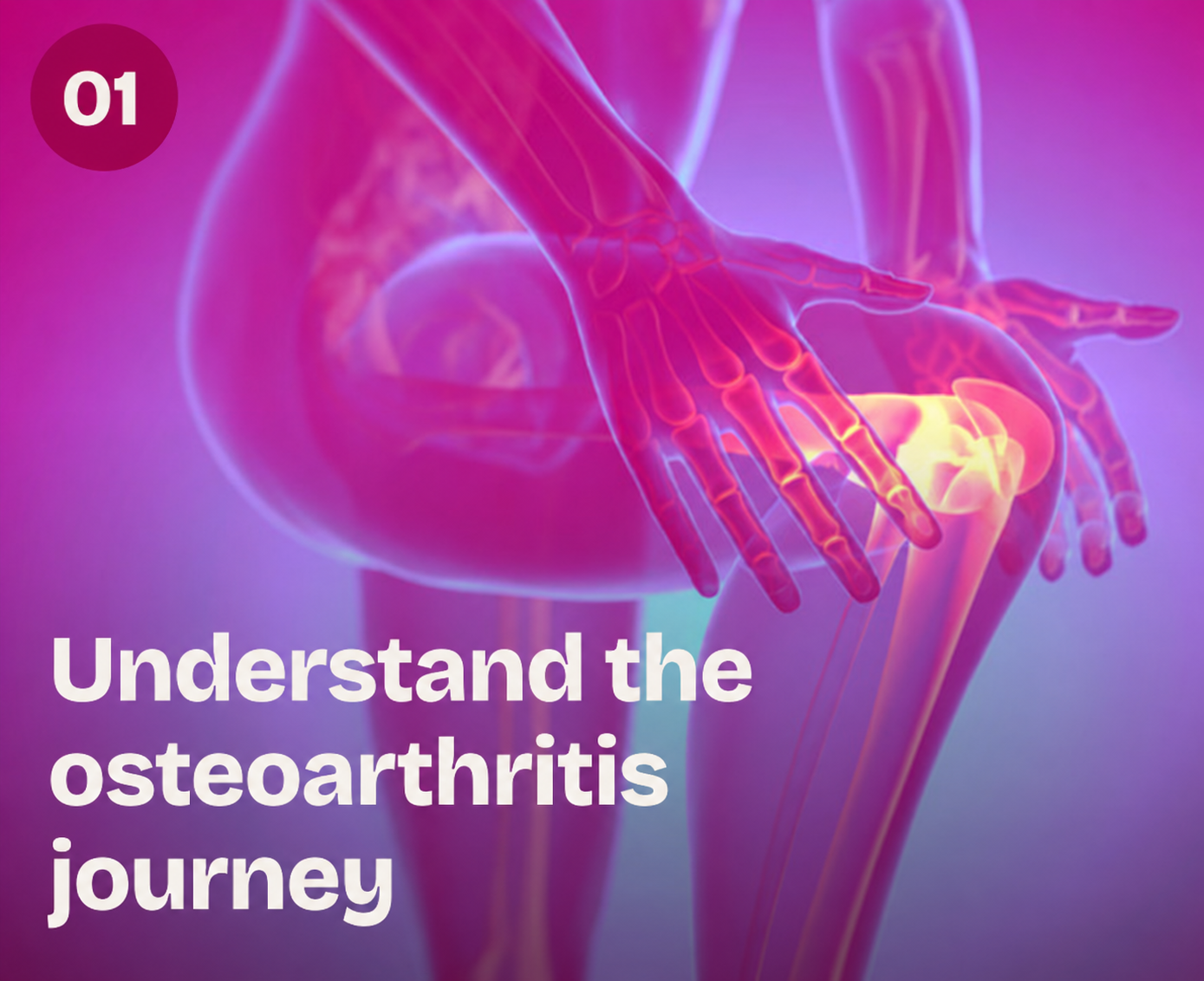
- Centre research is identifying the earliest signs of disease to help gain a clearer window of opportunity for treatment, to help prevent or stop osteoarthritis from getting worse.
- Osteoarthritis isn’t the same for everyone; it is a unique experience that presents differently between people. Centre research has identified new molecular subgroups of the disease and developed a machine learning tool to predict people with knee osteoarthritis at risk of rapid progression. These advances could help personalise future osteoarthritis treatments.
Key messages
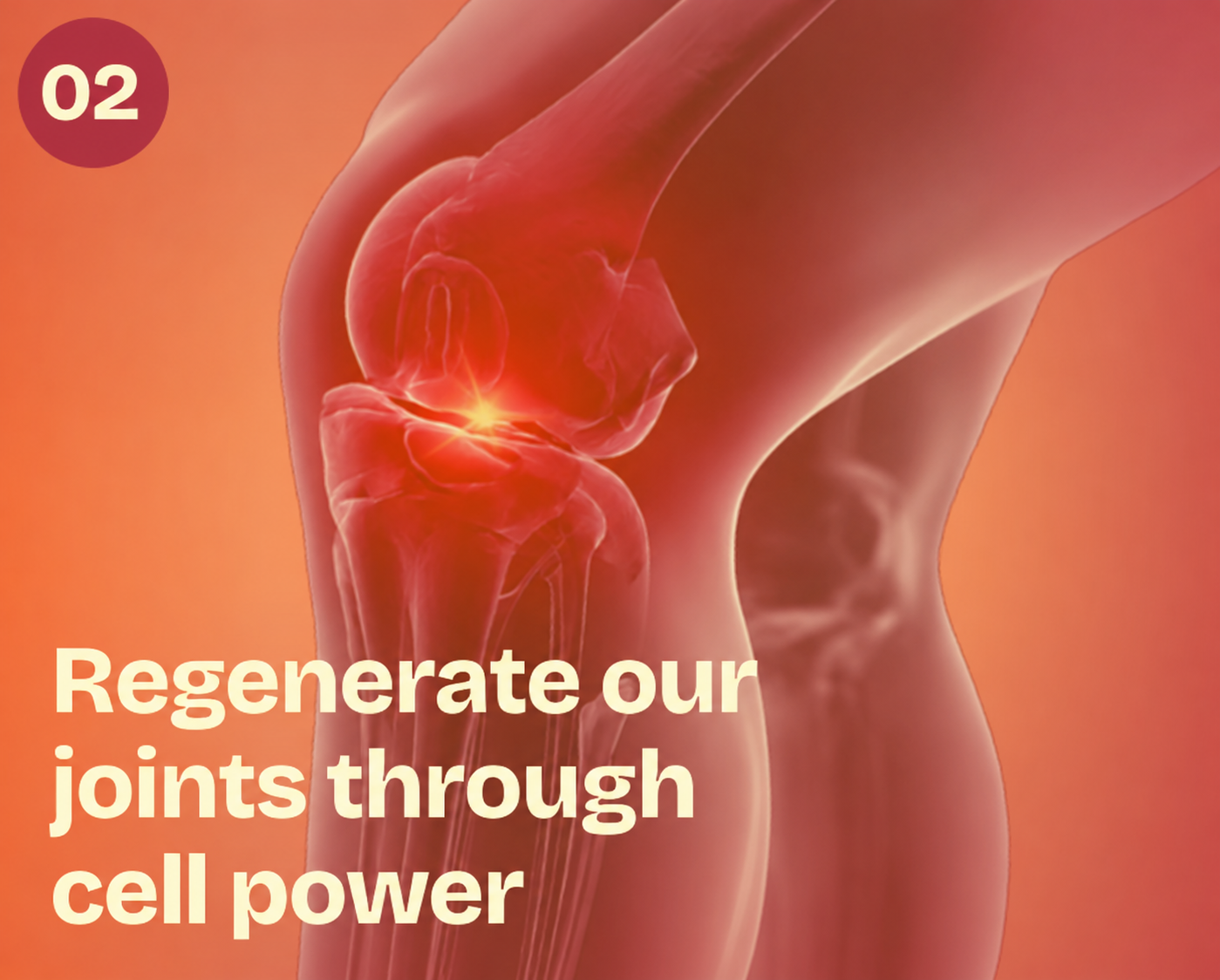
- Centre research is exploring promising methods to repair and regenerate a person’s own joint, such as cell therapies and tissue engineering, that could delay or even avoid the need for joint replacement.
- Centre researchers helped drive NHS approval of autologous chondrocyte implantation (ACI) in 2017 for treating knee cartilage defects, which can develop into osteoarthritis if left untreated. Today, ACI is commercially available across multiple continents, helping tens of thousands of people globally.
Key messages
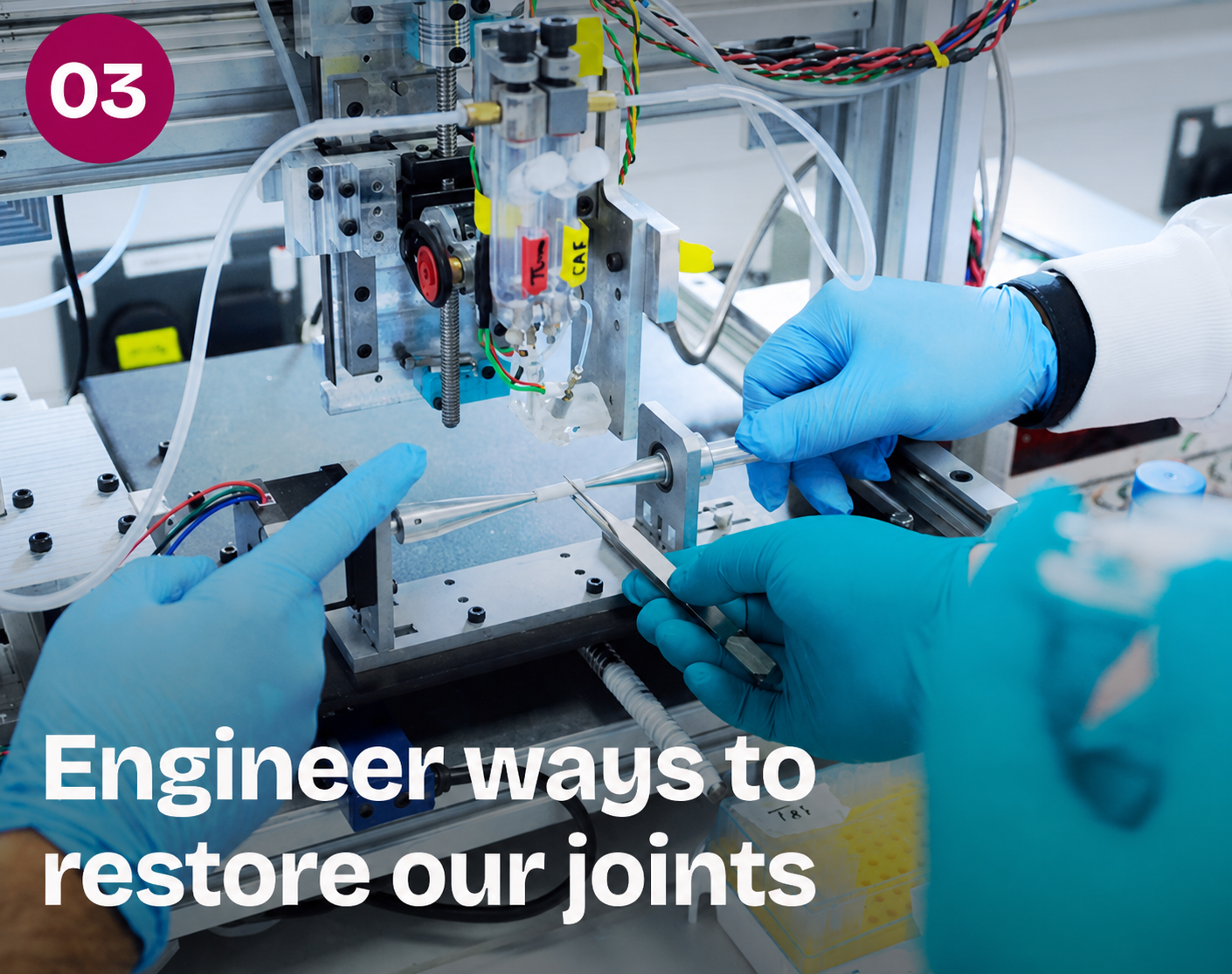
- Centre researchers are exploring tissue engineering strategies for the future, including materials and 3D-printed structures. These provide support, strength and repair, promoting chemicals for joints with osteoarthritis to grow on and rebuild themselves.
- Centre researchers have established two spin-out companies: Jetbio, a 3D bioprinting system to produce human-like tissue quickly and at scale, and Mesenbio, supporting a potential arthritis treatment using engineered cells.
Key messages
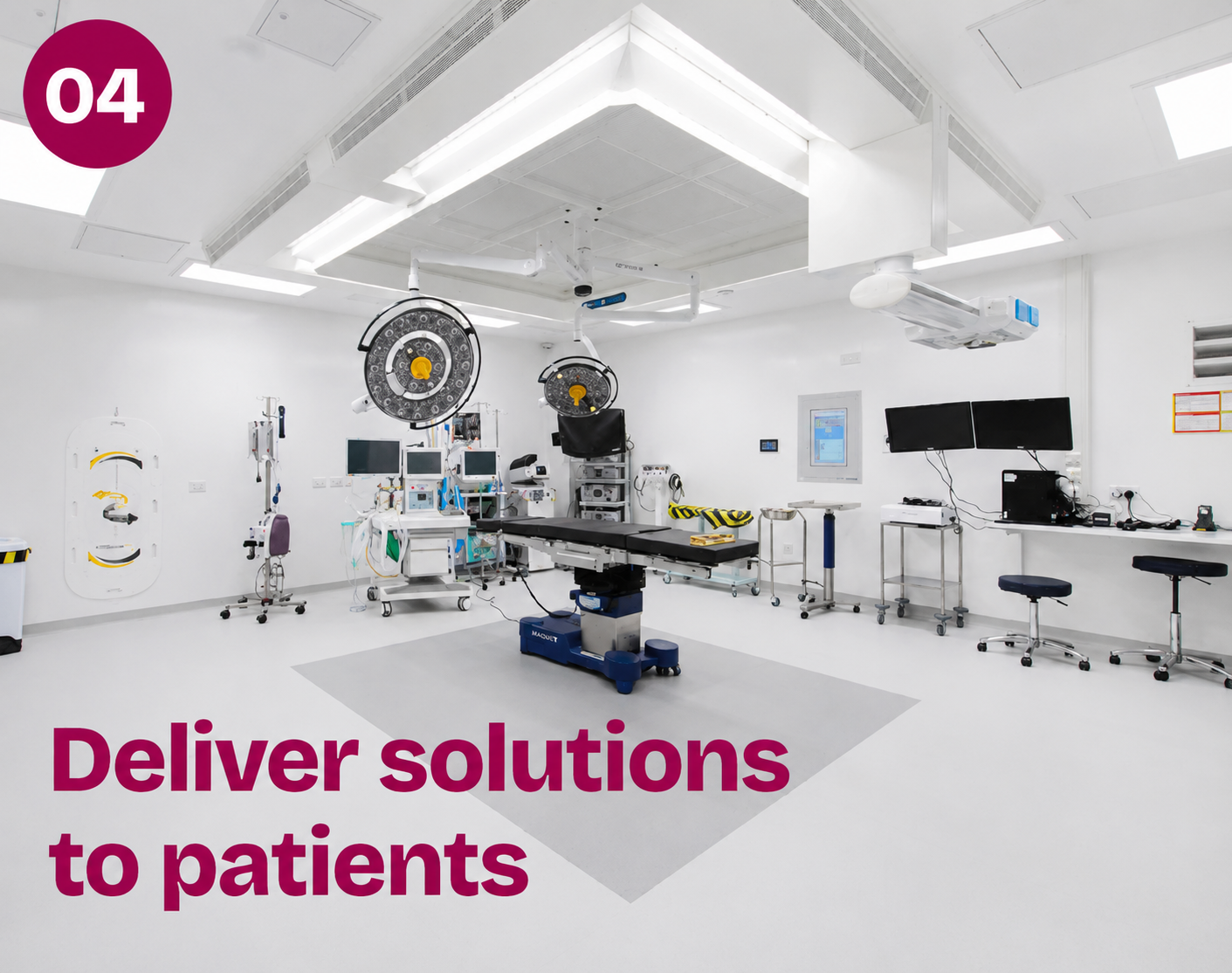
- Centre research is helping to maximise benefits for people with arthritis now and in the future by building capacity and capability through new research, facilities and technology, and empowering the next generation of researchers.
- A world first machine called a Field Cycling Imager (FCI) is being used to explore its potential to detect early-stage knee osteoarthritis before changes are visible on x-ray.
£4.8m of Arthritis funding has led to
Better understanding
More than 250 publications cited more than 8,000 times
More research funding
More than £50m leveraged funding
Capacity growth
More than 140 staff and students employed and trained
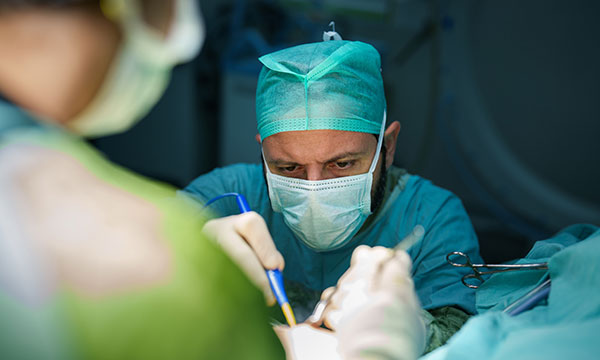
Our Centre for Tissues Engineering and Regenerative Therapies
This centre first opened in 2011 and was renewed for a second term in 2016. It is in its ‘Impact’ phase until 2028. Current treatments for early osteoarthritis are usually limited to non-surgical options such as pain killers and physiotherapy. Research at this centre aims to regenerate bone and cartilage by using the patients’ own stem cells to repair joint damage caused by osteoarthritis.
Download the Centre for Tissue Engineering and Regenerative Therapies Impact Report as a PDF.
Download the report as a PDF