
Arthritis UK Centre for Osteoarthritis Pathogenesis Impact Report
Getting a clearer idea of what osteoarthritis is, why it starts, and how to intervene
For over a decade, the Arthritis UK Centre for Osteoarthritis Pathogenesis Centre has been studying what causes osteoarthritis at the start. Osteoarthritis affects around 10 million people in the UK, yet existing therapies only partially reduce symptoms and no cure exists. By leading research to unpick this disease, the Centre is bringing new medicines closer to those affected.
Enter the Centre
In 2013, the Kennedy Institute of Rheumatology moved from Imperial College London to the University of Oxford, to lead and launch the Centre. Since then, Imperial College London, Queen Mary University of London, Sheffield University, King’s College London, Southampton University, the University of Glasgow, the University of Edinburgh and the University of East Anglia have joined. The Centre aims to understand why osteoarthritis and associated pain develops, identify novel ‘markers’ which indicate disease risk, and develop new therapies for people with osteoarthritis.
Centre for Osteoarthritis Pathogenesis Impact ReportKey messages from the Impact Report
I have been immensely privileged to lead the Centre for Osteoarthritis Pathogenesis... It is fair to say that over the past ten years the landscape has changed substantially and we have a much clearer idea about what the disease is, why it starts and how to intervene. It has ended up being a very exciting journey!

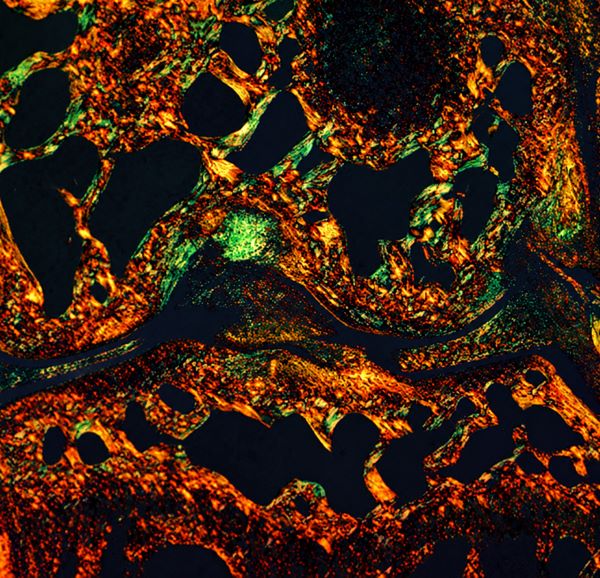
Understanding the root causes of osteoarthritis
The Centre is helping to unlock the origins of osteoarthritis, such as:
- Osteoarthritis is an active, biologically driven disease.
- Cartilage can repair itself throughout our life. It even happens in people with advanced osteoarthritis
- Keeping active helps maintain cartilage health.
Finding new targets and treatments
Centre researchers have found several promising new targets that restore cartilage health while also easing symptoms. Two potential targeting molecules that have progressed furthest along the development pipeline are:
- Retinoic acid, a derivative of vitamin A that suppresses injury-induced inflammation in cartilage.
- Agrin, a molecule that activates resident stem cells within the joint and promotes the formation of new cartilage by switching on repair pathways that are normally lost during osteoarthritis. From this discovery, a powerful new technology is being developed and a spin-out company called ReFleks has been formed.
Thinking big and collaborating wide
- Osteoarthritis is one variable disease with a common core biology, rather than multiple conditions. This was shown through the STEpUP OA study, an international cross-disciplinary project led by Centre Director Professor Tonia Vincent. This study mapped the biology of osteoarthritis at a level of detail and scale never achieved before.
- Older age at the time of injury and being female both increase the chances of developing post-traumatic knee osteoarthritis knee osteoarthritis.
- A key pain-causing molecule in osteoarthritis released by injured cartilage cells, called NGF, can be blocked by a vaccine to relieve pain in preclinical disease models.

Building capacity for the future
- Centre infrastructure has enabled many investigators to advance their careers, establish new osteoarthritis research groups and win awards.
- Centre infrastructure has also helped sustain long-term studies such as the Knee Injury Cohort at the Kennedy (KICK), Oxford Knee Injury Cohort (OxKIC) and the Meniscal Tear and Osteoarthritis Risk (MENTOR) cohort.

"Being part of the Centre since its establishment in 2011, first as a postdoctoral fellow and later as a Principal Investigator, has been deeply rewarding. Its support fostered my independence, enabled collaborations, helped me secure fellowship funding, and establish my research group in Sheffield, focusing on identifying therapeutic targets for osteoarthritis"
Dr Heba Ismail, Associate Professor in Chronic Disease Biology at the University of Sheffield
£4.8m of Arthritis funding has led to
Better understanding
More than 450 publications cited more than 25,000 times
More research funding
More than £50m leveraged funding
Capacity growth
More than 140 staff and students employed and trained