
Arthritis UK Centre for Osteoarthritis Pathogenesis

Team science to better understand the root causes of osteoarthritis
Arthritis UK established the Osteoarthritis Pathogenesis Centre of Excellence in 2013 with £4.5 million of infrastructure funding. At that time, the Kennedy Institute of Rheumatology moved from Imperial College London to the University of Oxford, to lead and launch the Centre. Since then, the Centre has become multi-institutional. The Centre was created to build capacity, address unanswered scientific questions, seek additional funding, embed patient and public involvement and build networks.
This Centre was research active from 2013 till 2023, over two terms of funding from Arthritis UK. Now, the Centre is in its ‘Impact’ phase until 2028. During this time, they are focussing on securing future funding and pushing their research to the next level, closer to patient benefit, rather than setting up new studies. Read our Impact Report to find out about this Centre’s research to date.
What is pathogenesis?
The biological mechanisms involved with why a disease starts and develops. This area of research is important because to tackle a disease, it is important to understand first its inner workings.
Centre for Osteoarthritis Pathogenesis Impact ReportWhy is this Centre’s research important to people with arthritis?
To date, studies of osteoarthritis have largely been limited to investigating the processes occurring in late disease. In 2013, we knew that osteoarthritis was a complex whole-joint disease driven by many different factors. However, the underlying pathways that drive and regulate this condition weren’t well understood. This left a big gap, because to develop new and more effective treatments, it is essential to understand fully the basic processes involved in osteoarthritis.
Meet some of the centre members

Professor Tonia Vincent – Centre Director
“I have been immensely privileged to lead the Centre for Osteoarthritis Pathogenesis... It is fair to say that over the past ten years the landscape has changed substantially and we have a much clearer idea about what the disease is, why it starts and how to intervene. It has ended up being a very exciting journey!”

Dr Fiona Watt
“I’m a clinical academic rheumatologist based in the Department of Immunology and Inflammation at Imperial College London and have been a member of the Centre since its inception in 2013.”

Dr Suzanne Eldridge
“I’m a Senior Lecturer at Queen Mary University of London, where my research focuses on developing regenerative treatments for osteoarthritis. When the Centre was first established in 2012, I was a second-year PhD student. Now, I’m an independent researcher leading my own team.”
What has this Centre done so far?
This Centre has trained and supported more than 140 staff and students and published more than 450 research papers. Their work has helped lay the groundwork for others to build on, being cited more than 25,000 times. Some of their key discoveries to date include:
- Discovering that retinoic acid, a derivative of vitamin A, suppresses injury-induced inflammation in cartilage. From this, a new potential treatment for people with hand osteoarthritis is being explored in a study called RAMBOH-1.
- Showing that osteoarthritis is one variable and biologically driven active disease.
- Discovering that Agrin activates resident stem cells within the joint and promotes the formation of new cartilage by switching on repair pathways that are normally lost during osteoarthritis. From this discovery, a powerful new technology is being developed and a spin-out company called ReFleks has been formed.
- Demonstrating that one key pain-causing molecule in osteoarthritis released by injured cartilage cells, called NGF, can be blocked by a vaccine to relieve pain in preclinical disease models.
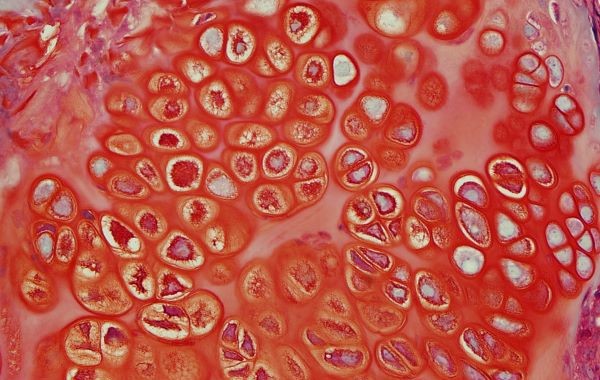
Guess what this is
This is what cartilage cells in our growth plate look like. This image was captured by the Histology Team at the Centre.
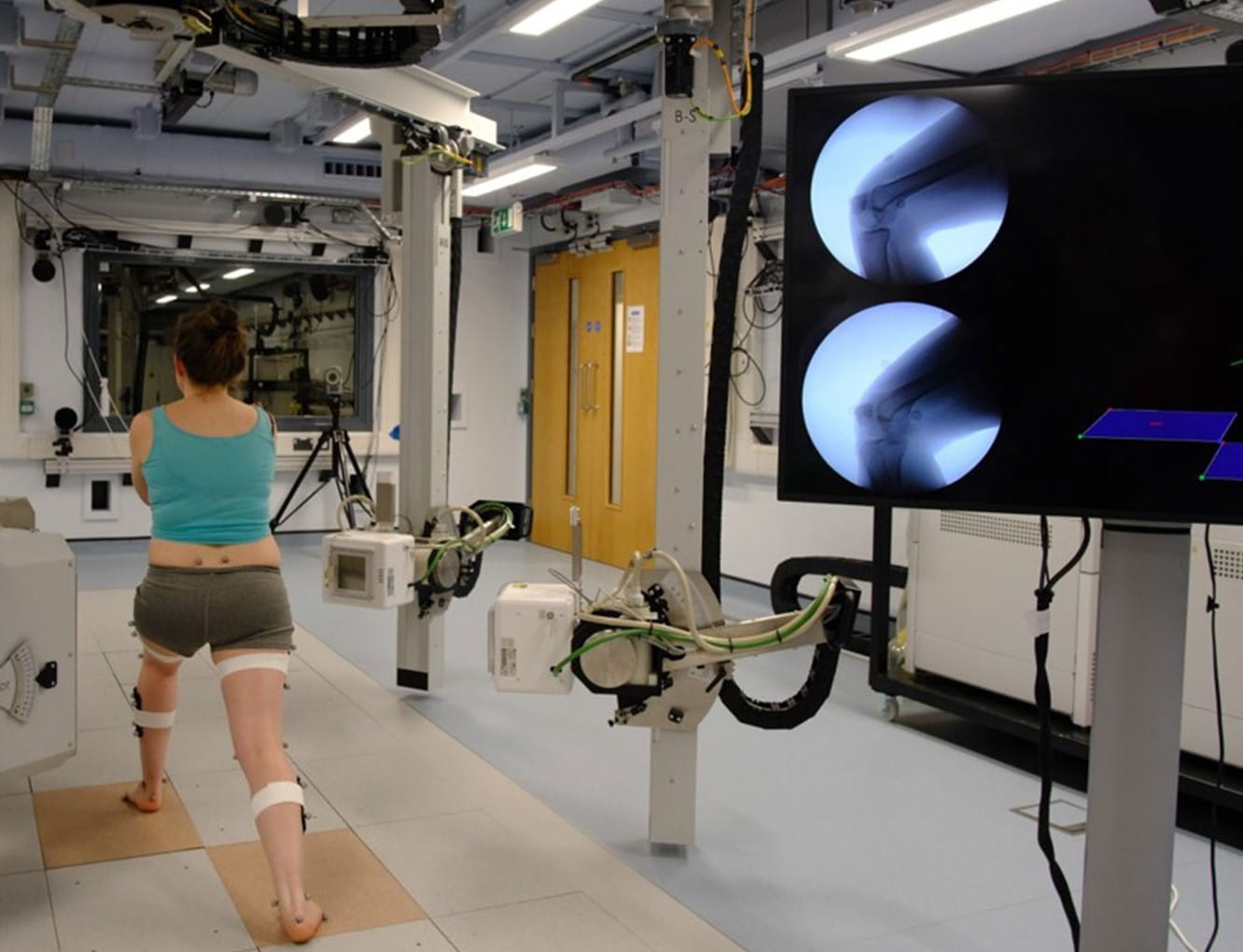
Arthritis UK Biomechanics and Bioengineering Research Centre Impact Report
For many years, we’ve known that mechanical loading and inflammation contribute to osteoarthritis but the biological processes that link these factors were unknown. The impact of joint injury and joint surgery on our biomechanics and biology, and subtleties in gait or alignment that could contribute to long-term disease, was also unclear. Until now.
Other Arthritis UK research centres of excellence
-
Arthritis UK Pain Centre
Research at this centre aims to better understand the biological basis of pain in osteoarthritis, to develop new drugs to treat pain more effectively and use a more targeted treatment approach.
-
Biomechanics and Bioengineering Research Centre
Under the leadership of Professors Duance, Caterson and Sparkes, this research centre aims to help people with musculoskeletal conditions live better.