
Uveitis
Uveitis
Uveitis affects the inside of the eye and can sometimes be linked to inflammatory arthritis in adults and children. Although it is rare, getting the right diagnosis and treatment early can help protect your sight.
Key facts
|
What is uveitis?
Uveitis is an eye condition that causes inflammation in the uvea or uveal tract. This is the middle layer of the eye where the iris is, which is the coloured part of the eye.
It’s a rare condition that affects 2 to 5 in every 10,000 people in the UK. It can occur at any age, but it is most common in people aged 30 to 40 years old.
Uveitis happens when the immune system becomes overactive in the eye, causing inflammation. This is sometimes linked to an underlying inflammatory autoimmune condition, where the immune system mistakenly attacks healthy tissues, such as arthritis.
It causes pain, red or watery eyes and vision changes. Most cases of uveitis should get better with treatment. But it can be serious and lead to more serious problems if it's not treated.
What are the types of uveitis?
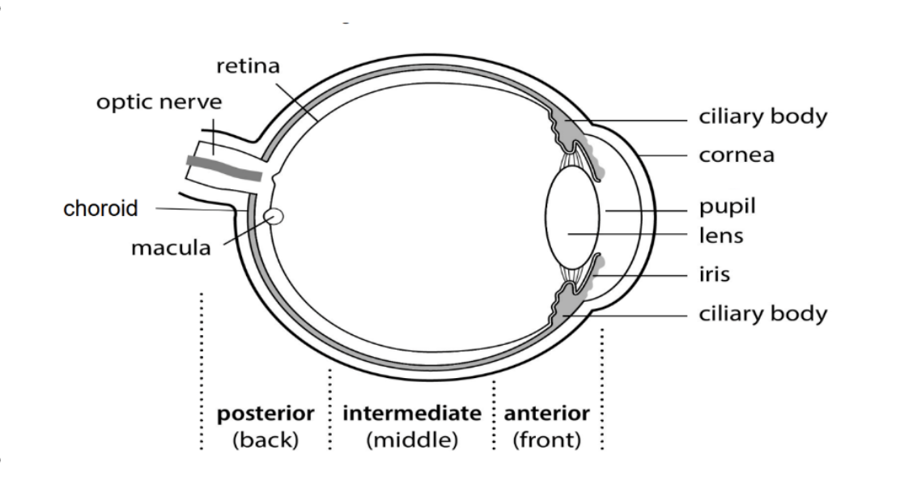
The uveal tract is made up of 3 parts:
- Iris – the coloured part of your eye which controls the amount of light entering the eye.
- Ciliary body – the circular band of tissue behind the iris that produces a watery fluid inside the front part of the eye.
- Choroid – a layer of pigmented tissue and blood vessels which supply your retina (the inner layer of the eye).
There are different types of uveitis based on where the symptoms happen.
- Anterior uveitis is the most common type and affects the iris and or the ciliary body in the front of the eye. It is sometimes called iritis. It usually comes on suddenly and lasts a short time, but it may come back or last a long time in some cases.
- Intermediate uveitis mainly affects the vitreous – the jelly in the middle of the eyes. Symptoms are more likely to last a long time or come back.
- Posterior uveitis affects the back of the eye, the choroid, the retina, the blood vessels in the retina or the optic nerve. It can come on suddenly, last a long time or come back multiple times depending on the cause.
- Panuveitis affects all layers of the uvea. It is usually a chronic form of uveitis and will likely come back.
What causes uveitis?
Autoimmune conditions
Uveitis can be linked to an underlying autoimmune condition. These are conditions where the body’s immune system mistakenly attacks healthy tissues.
These include:
- axial spondyloarthritis (including ankylosing spondylitis)
- psoriatic arthritis
- reactive arthritis
- juvenile idiopathic arthritis (JIA)
- sarcoidosis
- inflammatory bowel diseases (like Crohn’s disease or ulcerative colitis)
- multiple sclerosis
- TINU (tubulointerstitial nephritis and uveitis).
It is also very rarely caused by rheumatoid arthritis or Sjögren disease.
People with the HLA-B27 gene are more likely to get uveitis, especially anterior uveitis. 1 in 2 people with anterior uveitis have the HLA-B27 gene.
This gene is found in people with some autoimmune conditions, including types of inflammatory arthritis. Having the gene doesn’t necessarily mean you will develop uveitis, but it can increase the chances.
Infections
Uveitis can be caused by some infections, such as:
- herpes simplex virus type 1 – which causes cold sores, not the strain that causes genital herpes
- the herpes zoster virus – which causes shingles
- tuberculosis – a bacterial infection in the lungs
- syphilis – a sexually transmitted infection
- toxoplasmosis – a parasite infection spread by eating contaminated food or having contact with infected cat poo
- CMV – a common virus that’s usually harmless, but can sometimes cause flu-like symptoms
- Lyme disease – a bacterial infection spread by infected tick bites
- HIV – a virus that attacks the immune system.
Other causes
Occasionally, an injury to the eye can cause uveitis. Very rarely, a severe eye injury may also cause uveitis in the other eye. This is a condition called sympathetic ophthalmitis.
Certain medicines can cause uveitis as well, such as bisphosphonates for osteoporosis.
Around 1 in 2 cases of uveitis have no clear cause. This is what doctors call idiopathic.
What are the symptoms of uveitis?
The most common symptoms of uveitis are:
- eye pain which may feel worse when you’re reading
- red or watery eyes
- reduced or blurred vision
- sensitivity to light
- lights in the corner of your eyes (flashes)
- headaches
- dark spots moving across your vision (floaters).
Your symptoms may depend on the type of uveitis you have:
- Anterior uveitis usually causes painful, red eyes, light sensitivity and blurred vision.
- Intermediate uveitis usually causes floaters and blurred vision, but little to no pain or redness in the eye.
- Posterior uveitis usually causes blurred or reduced vision.
- Panuveitis can cause a combination of all the above symptoms.
Symptoms can develop quickly, within a few hours or days, or more gradually across weeks or months. You usually experience symptoms in 1 eye, but sometimes you can experience them in both.
Some people may only have one episode of uveitis, but for others it may come back.
If you experience any of the mentioned symptoms, you should see your doctor as soon as possible so they can refer you to an eye specialist.
Some people, especially children, may experience no symptoms at all. If you or your child has JIA, they will need regular monitoring to check for uveitis.
What are the complications?
Uveitis may cause other eye conditions which can result in reduced sight. Some treatments like steroids can also cause complications, especially if you’re on them for a long time.
Some complications include:
- Macular oedema – this is the main cause of vision loss in uveitis, where the central retina (the macula) becomes swollen. It can be treated with steroid eye drops or injections into the eye.
- Glaucoma – a condition which damages the nerve connecting the eye to the brain, often caused by a rise in eye pressure. It can be treated with eye drops, laser or surgery.
- Cataract – a condition where the clear lens inside the eye becomes cloudy. It can be treated with surgery.
These complications are rare, and the chance of getting them can be reduced with the right treatment.
How is it diagnosed?
If your doctor or optometrist thinks you have uveitis, you’ll be referred to an eye specialist called an ophthalmologist. Uveitis is sometimes tricky to diagnose, so they’ll need to do a series of tests before they can diagnose it.
The ophthalmologist will use a piece of equipment called a slit lamp. It has a microscope and a bright light which allows them to check for inflammation in your eye.
You may also have:
- a dilated eye examination – where eye drops are used to widen your pupil so they can check the back of your eye
- an eye pressure check
- an OCT scan – a quick, painless scan that takes detailed pictures of the back of your eye
- fluorescein angiography – where a dye is injected into a vein in your arm so they can check for inflammation and leakage from blood vessels in the retina.
They may also need to run other imaging tests, X-rays or blood tests to check the cause of your symptoms and rule out other eye conditions.
If your test results come back normal, it doesn’t mean there isn’t an underlying cause for your symptoms. Your ophthalmologist will consider your test results alongside your symptoms, eye examination and medical history before making a diagnosis.
How is it treated?
Your treatment will depend on the cause and the severity of your uveitis.
Steroids
Most people will have a course of steroids (corticosteroids). They are prescribed to help reduce the inflammation.
For anterior uveitis, you will take them in the form of eye drops. For intermediate or posterior uveitis, you may need tablets or injections as eye drops can't reach these parts of the eye.
In some cases, you may have longer-acting steroid implants which are injected into the eye and dissolve naturally over time. These deliver medicine directly into the eye for a longer period, rather than having more frequent eye drops or injections.
You must take steroids exactly as your ophthalmologist has told you. Don’t stop them suddenly. This can increase the risk of the inflammation coming back or getting worse. Stopping them too early can also make you feel unwell.
Your ophthalmologist will tell you how and when to reduce your dose.
Other treatment options
If you have more severe or chronic uveitis, or steroids have not worked, you may need treatments such as:
- medicines to reduce the activity of your immune system (immunosuppressants like methotrexate, mycophenolate or azathioprine)
- biological medicines (TNF-inhibitors like adalimumab) or biosimilars.
If you take any immunosuppressant medicines, you will need to have regular blood tests to monitor how the treatment is affecting your body.
You may also be given eye drops that relieve pain and dilate the pupil.
If your uveitis is caused by an infection, you may also need antibiotics to treat the underlying infection. In very rare cases, you may need surgery. But your ophthalmologist will discuss this with you.
Uveitis and your arthritis medicines
Uveitis can occur alongside inflammatory arthritis. The medicines used to control arthritis can sometimes also be used to treat and prevent uveitis, such as:
What to do if your uveitis flares
If you develop any uveitis symptoms, such as eye pain, redness, light sensitivity or blurred vision, you may be experiencing a uveitis flare-up.
You should contact your healthcare team as soon as possible. They can advise you on the next steps, including how to get an urgent assessment.
It is important that your symptoms are checked as soon as possible, ideally within 24 hours, to prevent any complications.
Living with uveitis
Uveitis can affect your day-to-day life. Changes in your vision, sensitivity to light or eye pain can make activities like reading, driving or working harder. Side effects of medicines can also affect your daily life.
Work and access to work
Vision problems can make some work activities more difficult. You may be able to have reasonable adjustments at work. Access to Work may also provide practical or financial support, such as specialist equipment or assistance.
Driving
Your eye care team can tell you if uveitis will affect your ability to drive. You may need to tell the Driver and Vehicle Licensing Agency if your sight changes.
Eye surgery
If you have uveitis, it may mean you cannot have certain eye surgeries, such as for cataracts. Your eye care team will discuss this with you.
Support for sight loss
If uveitis has affected your vision, your eye care team can advise you about low vision aids and other support that may help.
If your sight is significantly affected, your eye care professional may assess whether you are eligible for a Certificate of Vision Impairment (CVI). Certification can help you access additional support and services.
The Royal National Institute of Blind People (RNIB) also offers a free sight loss advice service via email, website or phone.
Frequently asked questions
Is uveitis an emergency?
Uveitis needs to be checked urgently by an ophthalmologist. If left untreated, it can cause sight loss. If you get sudden sight loss, that is an emergency and you need to go to A&E or call 999 as soon as possible.
Will I go blind?
Permanent sight loss is rare, especially if it is caught early and treated. However, if left untreated or flare-ups aren’t managed, it can cause complications like sight loss. Regular treatment and follow-ups with your eye care team will reduce this risk.
Does uveitis go away?
Some people will have uveitis once and never have it again. For others, it may come back or they may have episodes of uveitis throughout their life.
Is uveitis contagious?
No, uveitis is not contagious. You can’t catch it from someone or give it to someone else.
What is the difference between uveitis and conjunctivitis?
Uveitis is inflammation inside the eye, while conjunctivitis is inflammation of the thin layer that covers the white part of the eye and the inside of the eyelids.
Conjunctivitis can cause red, itchy, watery or sticky eyes. It can be caused by an infection or an allergy, and some types can spread from person to person. It will often get better without treatment.
Why do I need eye drops every hour?
Sometimes, you may need steroid eye drops every hour to treat uveitis. This is so the medicine can quickly stop the inflammation and prevent any scarring between the iris and the lens.
Sources
- Uveitis - NHS
- Uveitis | Health topics A to Z | CKS | NICE
- Uveitis - Moorfields Eye Hospital
- Uveitis I Eye condition information | RNIB
- Uveitis in Adults: A Review - University of Bristol
Last review: September 2026
Next review: September 2029
Reviewed byThis page was reviewed by:
|