
CRIISP: Understanding how psychological and social factors affect chronic pain
Consortium to Research into Individual, Interpersonal and Social influences in Pain
Chronic pain can affect many different aspects of people’s lives including relationships, work, school and family life. Biology helps us understand some parts of pain, such as signals from our nerves. But biology does not explain all pain. Our thoughts, emotions, relationships, daily life and wider society can also shape how pain starts, continues, improves or gets worse.
We want to understand these “psychosocial” factors. Psychosocial means the links between a person’s mind, relationships and social world. By learning which factors matter most, we hope to find better ways to prevent chronic pain and reduce its impact on people’s lives.
Research overview
This project looks at the most important psychosocial factors linked to chronic pain. Our aim is to bring together what we know about peoples lived experience of pain, their behaviour, their relationships and their biology. This will help us build a clearer picture of why chronic pain develops, why it can last, and what might help people recover or live better with pain.
We will identify the psychosocial factors that seem most important in chronic pain. This will help future research into the prevention and treatment of chronic pain.
What is the aim of this research?
We aim to understand how our thoughts, feelings, motivation, relationships, support from others, and wider social and cultural influences help to explain chronic pain.
We will look at these factors alongside biological information. Together, this can help researchers describe different patterns of pain in a richer and more useful way.
Why is this research important?
Chronic pain affects people in different ways. It can change how someone moves, sleeps, studies, works, cares for themselves and spends time with others. We want to understand why these differences happen, and what might help.
The project will also help researchers agree on the best ways to measure psychosocial factors in pain. This matters because researchers often use different words and tools for similar ideas. Clearer agreement will make future research stronger and easier to compare.
We also hope this work will point to new ways to prevent chronic pain and improve pain care. By bringing together psychosocial and biological research, we can support a fuller understanding of pain and open the door to better support for people who live with it.
What are we doing?
We have organised the work into three key phases of research. People living with chronic pain will work with researchers throughout the project.
Phase one: Finding important psychosocial factors in pain
In the first phase, we will review existing research to find the psychosocial factors that may matter most in pain. We will look at pain across different ages and life stages. We will also look for better ways to measure pain as it changes in real life, not just at one moment in time.
We will also study large existing datasets. Some datasets follow people over many years. This helps us see how pain, health, work, relationships and social factors may change together over time.
We will bring this information together and ask people with pain, clinicians and researchers to help decide which factors are most important. We will also use a shared digital database to connect ideas and evidence from across the project.
Phase two: Testing the most promising ideas
In the second phase, we will test the most promising psychosocial factors in new studies. For example, we may look at how worry, attention, support from others, movement, activity and daily routines relate to pain. Some studies will take place in labs. Others will take place in people’s homes, workplaces or daily lives. We may use interviews, observations, mobile phones or wearable sensors such as activity trackers.
We will also test the most promising ideas in existing research groups and datasets. This will help us see whether the same factors matter for different types of pain and different groups of people.
Phase three: Sharing what we learn
In the final phase, we will bring together everything we have learned. We will create open resources that researchers can use to study pain in a more joined-up way. These resources will include guidance on the most useful psychosocial factors, how to measure them, and how to combine them with biological research.
What have we learned so far?
The CRIISP teams are still analysing the data from their research projects but some of their early findings include:
- Development of a framework for the study of states of chronic pain and transitions between those states. Defining different states of chronic pain and changes in those states, a topical review – CRIISP.
- An evaluation of how well large long-term studies measure the impact of chronic pain. It found that some datasets can help us understand pain’s impact on self-care, work and social life, but not all datasets measure these things clearly enough. How Well Can We Measure Chronic Pain Impact in Existing Longitudinal Cohort Studies? Lessons Learned - The Journal of Pain
- Social influences, including support networks, identity and life roles can affect how people enter into, live with or move out of chronic pain. Social influences in the experience of transition to or from long-term (chronic) pain: A systematic review of qualitative research studies | PLOS One.
What happens next?
The CRIISP team plans to continue this work. Researchers are developing new ideas and funding proposals on topics such as how clinicians and partners respond to pain, how people think about pain, high-impact pain, and how smart watches or phones could support personalised care.
Meet the team
Professor Ed Keogh – Professor of Psychology
Ed Keogh is Professor of Psychology in the Department of Psychology at the University of Bath. He is also Deputy Director of The Bath Centre for Pain Research.
His main area of research is the psychology of pain. He has an interest in sex and gender differences in pain, with a particular focus on psychosocial mechanisms (e.g., emotions, coping). He is currently interested in nonverbal communication, and whether there are sex differences in expressions of pain.
A second interest is in the role that cognitions and emotions play in the experience of pain and pain-related behaviours. For example, he has interests in the links between attention and pain, with a focus on understanding how pain can have a disruptive effect on performance. He is also interested in the cognitive biases that may occur within those with a fear of pain.
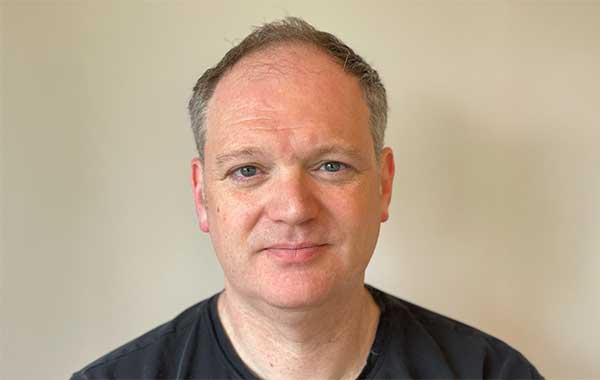
Professor Ed Keogh
- Professor of Psychology in the Department of Psychology at the University of Bath.
- Deputy Head of Department (Research and Knowledge Exchange), Department of Psychology
- Deputy Director, Centre for Pain Research
- Focus: The psychology of pain
- ORCiD Edmund Keogh 00000-0002-1615-3699

Key research information
- Project status: Complete
- Start date: 01/07/2021
- Completion date: 30/06/2026
- Lead researchers: Professor Ed Keogh
- Funding partners: UK Research and Innovation Strategic Priorities fund and Eli Lilly
- Research partners: Cardiff University, Keele University, Manchester Metropolitan University, Royal Holloway University of London, University of Bristol, University College London, University of Southampton, University of the West of England
- Location: University of Bath
- Grant Ref: 22891
Further information
-
CRIISP – Information on the APDP CRIISP consortium for pain research
Consortium to Research into Individual, Interpersonal and Social influences in Pain (CRIISP)
-
Professor Ed Keogh research portal
Deputy Head of Department (Research and Knowledge Exchange), Department of Psychology Deputy Director, Centre for Pain Research Professor, Department of Psychology