
Arthritis UK Northern Ireland Assembly Election manifesto 2027
Roadmap to Recovery: Prioritising Arthritis and Musculoskeletal Health
Over half a million adults, young people and children in Northern Ireland live with arthritis and other related MSK conditions. Every day, an alarming number of them are forced to put their lives on hold, as they wait in agony for the care and support they desperately need.
Our orthopaedic and rheumatology waiting lists for diagnosis and treatment are the longest in the UK – up to 8 years in some cases.
Resulting in enormous personal cost to quality of life, employment, education and mental health.
The consequences of these delays are profound. For instance, 43% of people living with MSK conditions in Northern Ireland are
economically inactive, with many forced to leave work due to a lack of employment support.
We also know that 79% of people with arthritis report living in pain most or all of the time and 76% report that waiting for treatment has harmed their mental health.
As outlined in our 2026 report ‘From Breaking Point to Recovery: Prioritising MSK Healthcare in Northern Ireland’, without urgent action, the burden of MSK conditions will continue to grow, increasing pressure on people, families, health services and the economy.
Yet, despite the scale and impact of arthritis here, Northern Ireland has no strategy, targets or coordinated leadership for MSK health.
Combine this with an ageing population, and it’s not surprising that we have reached a breaking point. This is why MSK health must be made an urgent priority.
Prioritising MSK healthcare will mean focused attention on arthritis and recognition that the condition is a core part of the wider health transformation agenda, including the neighbourhood model of ‘Care Closer to Home’.
Prioritising MSK healthcare will transform lives, unlocking access to treatment, reducing waiting lists and helping people get back to work if they want to – a win-win for our health and economy.
And prioritising MSK healthcare will ensure a better outlook for future generations, as they no longer have to live a life limited by the
devastating impact of arthritis and related MSK conditions, setting our country up for a healthier, brighter future.
This manifesto calls for arthritis to become an immediate government priority through action on waiting times, employment support and, crucially, strong MSK leadership.
Our calls
Our manifesto sets out actions for the next Northern Ireland Assembly. By implementing these calls, we can reduce the impact of arthritis and MSK conditions on individuals, health and care systems, and the wider economy, supporting people to manage their symptoms, maintain independence and improve quality of life now and for future generations.
Call 1: Make arthritis a public health priority
Arthritis and MSK conditions affect nearly a third of the population in Northern Ireland, with lengthy waits in every part of the MSK health system. As Margaret (who lives with osteoarthritis) told us: “Long waiting lists are not a ‘nuisance’, they are ‘factory for disability’”.
Arthritis and MSK conditions don’t only affect people physically, though. For example, depression is four times more common among people who live in persistent pain. In addition, people with osteoarthritis have a 61% increased risk of diabetes and a 24% higher risk of cardiovascular disease.
In the context of an ageing population, with increasing co-morbidities, MSK healthcare must be urgently addressed and made a public
health priority.
People with osteoarthritis have a 61% increased risk of diabetes and a 24% higher risk of cardiovascular disease.
Call 1 policy actions
- The Health Minister must appoint a Clinical Lead for adult and children’s MSK health, with a mandate to work cross-departmentally to deliver a regional strategy and costed action plan to improve access to MSK treatment and services.
- Public Health Agency to have a condition-focus on arthritis, delivering a high-profile and sustained public awareness campaign highlighting prevention, symptoms, treatment and condition management.
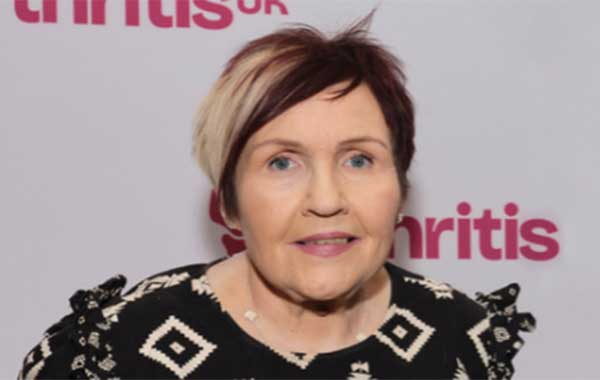
“My life was dismantled by the orthopaedic waiting list in Northern Ireland."
For decades, I was trapped in a cycle: referred, seen and then discharged because I was ‘coping’. But I wasn’t ‘getting on with it’. I was surviving – in agony. I lost my livelihood and my identity.
Margaret, 64, Belfast
Call 2: Tackle long waits for people with arthritis
Northern Ireland has some of the longest waiting lists in the UK. And people with arthritis are at the sharp end of this crisis. Orthopaedics and rheumatology have the most people waiting and the longest waits, with some individuals waiting up to 8 years for their first outpatient appointment. An outrageous amount of time, with staggering repercussions not just on a person’s physical health but their mental health, too.
After all, waiting lists are more than statistics. They represent:
- Lives lived in pain and declining health.
- Lives put on hold, where jobs, income and independence hang in the balance.
- Lives lived without answers or any idea of when support will come.
This cannot continue. We must take decisive and sustained action now to tackle the backlog and stop this happening to future generations.
Some people in Northern Ireland wait up to 8 years for their first outpatient appointment with rheumatology.
Call 2 policy actions
- Department of Health to target long waits in orthopaedics and rheumatology by:
- Increasing orthopaedic capacity and maximising theatre time to deliver more surgeries.
- Undertaking a comprehensive review of adult and paediatric rheumatology services.
- Committing to multi-year funding to address the backlog of tens of thousands of patients, with or without an agreed 3-year Executive budget.
- Department of Health to mandate a standardised transition pathway from paediatric to adult rheumatology services.
- Health Trusts to provide clear and regular communication with patients while they wait for treatment including:
- How to access additional support to manage their mental and physical health.

“Growing up with arthritis is challenging enough. The healthcare system shouldn’t add to that challenge."
Transitioning [into the adult healthcare system] isn’t just changing doctors. It’s moving from a child-centred environment where parents are heavily involved to an adult system where you’re expected to manage independently.
Sally, 21, Belfast
Call 3: Improve in-work support for people with arthritis
Arthritis and MSK conditions are the single biggest cause of disability in Northern Ireland. In fact, 43% of people with either arthritis or a
related MSK condition are economically inactive, often forced to give up work prematurely due to declining health and long waits for care.
In our health intelligence report ‘Left Waiting, Left Behind’ (which summarises the findings of a lived experience survey and presents a powerful snapshot of the reality of living with arthritis), 67% of people said that arthritis had impacted their ability to work in some way.
Arthritis and MSK conditions are one of the most common reasons for workplace absence in the UK, accounting for 23.4 million days lost in work in 2022.
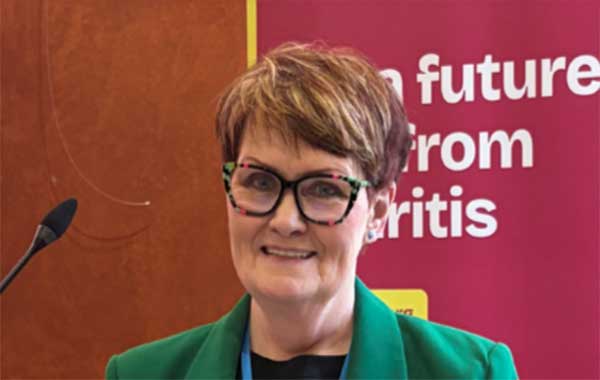
“Ultimately, it cost me my job... even though I felt I’d so much more to give.”
Work became harder and harder and, although I’d been there 25 years, my employer didn’t feel they could accommodate my needs, so I retired even though I felt I’d so much more to give. I felt devalued, useless and wondered what my life was going to be.
Pat, 68, Belfast
Call 3 policy actions
The Communities Minister to lead cross-departmental action on targeted support for people with arthritis in the workplace. Actions to include:
- Deliver an in-work support campaign specific to MSK conditions, promoting reasonable adjustments that support and sustain employment and create ‘arthritis-friendly’ workplaces.
- Increase visibility and access to Condition Management Programmes and the Access to Work scheme for people with arthritis.
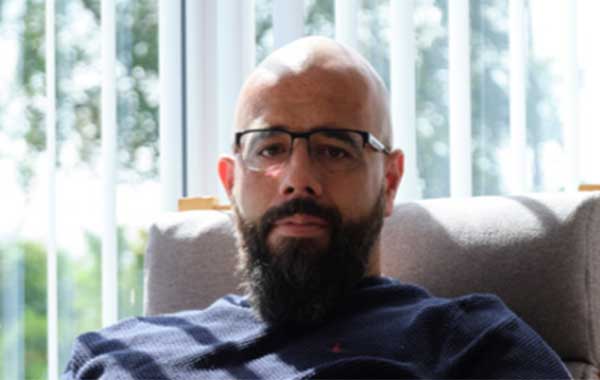
“Having access to pain management support would help people with long-term conditions to remain in work.”
I had to leave my job and not being able to work and support my family massively affected me. As a husband and a dad, I want to play football with my kids and spend quality time with my partner, but the fatigue and pain can really take a toll.
Gareth, 44, Lisbane
Our ask of you
If elected, be a voice for people with arthritis in the Northern Ireland Assembly
Arthritis is often called a ‘hidden’ condition because you can’t always see how it affects someone. As an MLA, your constituents with
arthritis are relying on you to:
- Meet with them to understand the challenges they face, day in and day out.
- Support our calls and speak up for people with arthritis in the Northern Ireland Assembly.
- Champion quality MSK healthcare in your local area so they can access the services they need, when they need it.
Work with us
By working with Arthritis UK Northern Ireland, you can make a difference to thousands of your constituents living with arthritis.
We are an experienced public policy team supported by our research community and can help you with policy development and scrutiny.
Our campaigning ethos is not just to highlight issues, but to help develop and deliver solutions. We’re committed to working constructively with the next Executive, MLAs, Health and Social Care (HSC) system and other stakeholders, to improve prevention, diagnosis, treatment and support for everyone affected by arthritis.
Signpost to us
Our services include self-management resources, local support groups, an online community and free Helpline: 0800 5200 520.
Please signpost constituents to us at arthritis-uk.
You can also connect with us on social media:
Facebook: /ArthritisUKNorthernIreland
X: @NIArthritis
Arthritis UK Northern Ireland can help you with your work in the Assembly. Email Northern Ireland’s Policy and Influencing Team to start your conversation: northernireland@arthritis-uk.
Let’s work together to make sure that people with arthritis in Northern Ireland can live more active, and less painful lives.
About arthritis and MSK conditions
Arthritis refers to painful, stiff, or restricted joints.
These symptoms are common in conditions that cause joint damage or inflammation, including osteoarthritis, autoimmune inflammatory forms of arthritis (such as axial spondyloarthritis, psoriatic arthritis and rheumatoid arthritis), crystal arthritis (such as gout), or as a symptom of inflammatory connective tissue diseases (such as lupus).
Arthritis is also used as an umbrella term for a range of conditions where arthritis is their main symptom. Although there’s no cure for arthritis, treatments have improved greatly in recent years and, for many types of arthritis (particularly inflammatory arthritis), there’s a clear benefit in starting treatment at an early stage.
Musculoskeletal (MSK) conditions are problems with the muscles, bones, joints and adjacent connective tissues.
Arthritis and MSK conditions can impact every aspect of life and are among the biggest causes of persistent pain, disability and working days lost.
They can reduce mobility (ability to move around) and dexterity (ability to use your hands). They can reduce your independence and affect your ability to work, socialise and travel. They can also affect your emotional and mental health. Arthritis is often regarded as a ‘hidden’ condition due to the nature of its symptoms. Arthritis and MSK conditions can strike at any age. There are currently around 48,000 children and young people in Scotland with an MSK condition and 600,000 across the UK.
Download 'Roadmap to Recovery: Prioritising Arthritis and Musculoskeletal Health' as a PDF
Download 'Roadmap to Recovery: Prioritising Arthritis and Musculoskeletal Health' the Arthritis UK Northern Ireland manifesto as a PDF.
Arthritis UK NI Assembly Election ManifestoMore on the impact of arthritis and MSK conditions
-
From Breaking Point to Recovery: Prioritising Musculoskeletal Healthcare in Northern Ireland
Arthritis UK Northern Ireland report: "From Breaking Point to Recovery: Prioritising Musculoskeletal Healthcare in Northern Ireland."
-
Left Waiting, Left Behind: The Reality of Living with Arthritis report
Based on a survey, this presents insights into the personal and financial cost of living with arthritis.