
Research Highlight of the Year 4: Making osteoarthritis peer mentoring accessible
Developing an osteoarthritis peer mentoring programme with and for people facing socioeconomic disadvantage
How patient voices shaped a new approach for osteoarthritis care.

A team from the University of Leeds have developed a remote support programme to help people with osteoarthritis facing ‘socioeconomic disadvantage’ – barriers linked to factors such as education, income or housing. Over six remote sessions, a trained volunteer gives guided support to someone else with the same condition, a process known as ‘peer mentoring’.
“The peer element can make a massive difference. Someone with the same condition understands how osteoarthritis can affect all aspects of your life and they have time to help you work out how you can manage it better.”
The programme was created in stages based on an in-person programme. People with lived experience were central to the work. They shared views about things like digital access, confidence, and support. This helped make the programme easier to access and use.
“This study developed a peer mentorship programme that we hope will bridge gaps in arthritis care and reduce inequality. The programme aims to help people feel less isolated, more confident, and better able to manage their symptoms.”
The programme was then trialled in a small study. The findings suggest the programme could benefit people delivering and receiving it and so help create a fairer future.
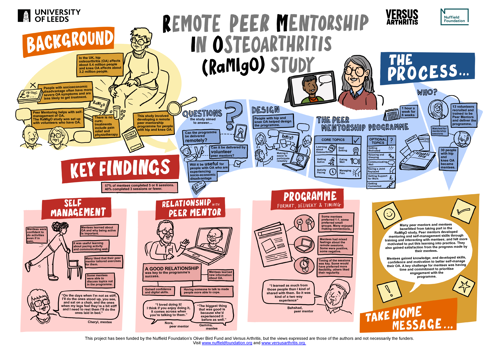
“Ultimately, our study aimed to show how people-focused, supportive approaches could help create a fairer future — where factors like your postcode and income don’t determine how well you live with arthritis.”
The project was led by Prof Gretl McHugh from the University of Leeds working with first author Dr Anna Anderson, the wider research team, public co-applicants, and peer mentors. It was co-funded by Arthritis UK and the Nuffield Foundation through the Oliver Bird Fund.

The other five research projects on our shortlist
Researching how socioeconomic inequalities can impact musculoskeletal pain and primary care.
Find out more2. How immune cells could guide JIA treatment
Using immune cell health to track disease activity in juvenile idiopathic arthritis.
Find out moreUsing genes from nearly 2 million people to better understand the biology of osteoarthritis.
Find out moreInvestigating how sex differences play a role in the immune system.
Find out moreInvestigating how changes in immune cells can help us understand what remission in rheumatoid arthritis really looks like.
Find out moreChoose your favourite research highlight
Vote now for your favourite research highlight sponsored by Circle Health Group!
Vote now