
Biomechanics and Bioengineering Research Centre Impact Report
Restoring our joints step by step
Our joints are complex structures, containing various tissues and fluids that work together to produce movement. Healthy joints rely on a number of things, including how they move during our everyday actions. This is why abnormal joint movement can negatively affect our joint health. And when our joint health deteriorates, this can lead to osteoarthritis and other musculoskeletal issues.
However, why some types of abnormal joint movement contribute to the onset or progression of conditions like osteoarthritis is not fully known. If we knew more, poor movement patterns could be identified and corrected, while encouraging protective movement patterns. This important field of work is known as biomechanics.
Biomechanics and biology
For many years, we’ve known that mechanical loading, inflammation and pain contribute to osteoarthritis. However, the biological processes that link these factors were unknown. Advanced tools like 3D motion capture, gait analysis and inertial measurement units were used in research, but rarely in the clinic. Surgery to treat osteoarthritis existed but techniques were inconsistent and long-term data was lacking to understand which surgeries are best and why. The impact of joint injury and joint surgery on our biomechanics and biology, and the subtleties in gait or alignment that could contribute to long-term disease, was also unclear.
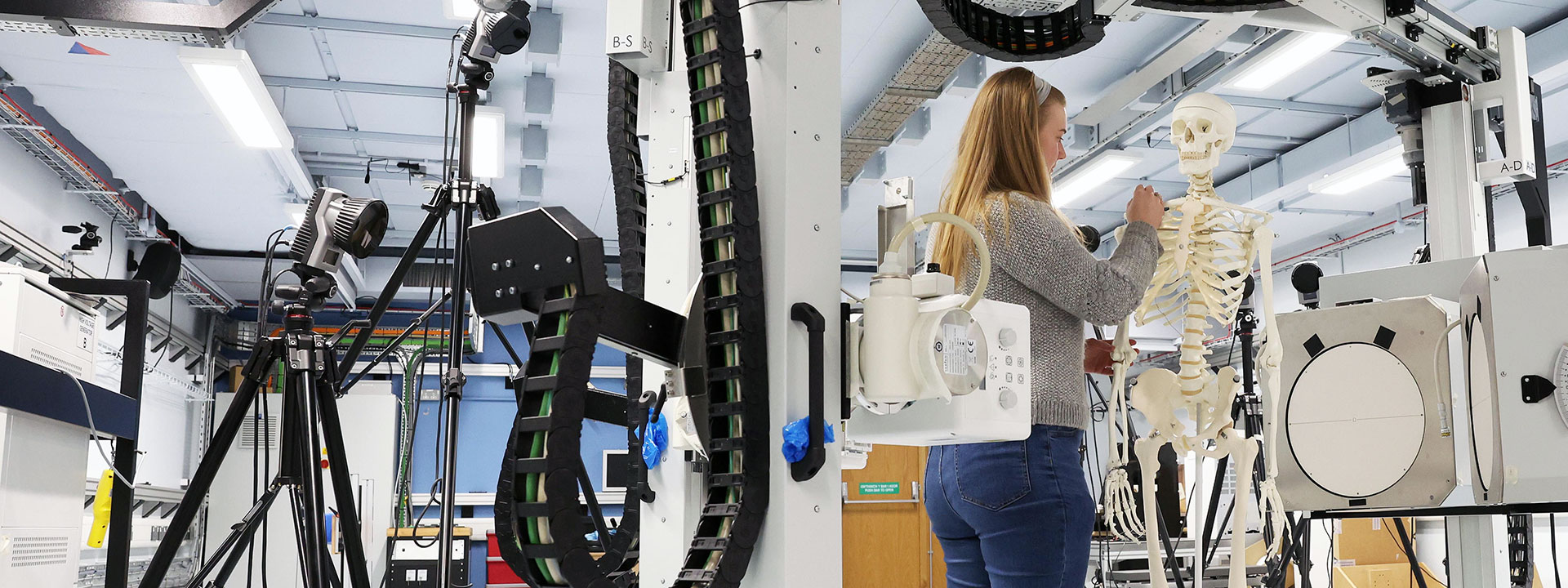
The Centre has also set up a new super lab making leaps in research called the Musculoskeletal Biomechanics Research Facility, a one-of-a-kind laboratory within the UK. These facilities enabled the establishment of Wales’ first NHS Clinical Gait Analysis Referral Service in 2019. Before then, people living in Wales in need of this service had to travel to Oswestry in England.
1. Boosting the success of surgery
Why is this important to people with arthritis?
Not everyone with arthritis will need surgery, but it may be offered to treat osteoarthritis. There are different types of surgery available that can help restore how our joints move, prevent the condition from getting worse and reduce pain.
However, whether a particular surgery achieves this, and how this translates into improvements in day-to-day movements is not fully understood. For example, for certain types of surgery, there is not strong proof as to what really works or why. This means it’s hard to know how people can get the best possible results from surgery.
Early-stage osteoarthritis: shifting the load
Joints that don’t move the way they are supposed to, such as those found in people with bowed legs (genu varum) or knock knees (genu valgum), are at higher risk of developing osteoarthritis. One type of surgery that may be offered to people with bowed legs or early-stage osteoarthritis on the inner side of their knee is high tibial osteotomy (HTO).
This surgery involves cutting and reshaping bone to shift weight away from the damaged part of the knee joint. To improve this surgery and help people reach their best possible outcome, the Centre is gathering data about changes that occur following an HTO. By combining clinical, biomechanical and biological information from fifty HTO patients over ten years, they’ve shown that this surgery successfully realigns the knee joint.
HTO surgery
- Increases walking speed and yet also decreases loading through the side of the knee joint affected by arthritis.
- Restores knee joint loading patterns, as we step from one leg to another whilst walking, in a way that would be expected to reduce further structural damage in the future.
- Regulates signals in the bone and joint fluids, which influence pain, inflammation and joint damage.
- Results in positive compensatory movement changes in our hips, leg bone and ankle.
Late-stage osteoarthritis: new joint, new you
Ten million adults in the UK have a probable diagnosis of osteoarthritis, and total knee replacement (TKR) is one common treatment option for late-stage osteoarthritis. Most are satisfied after the procedure, but roughly one in five are not. Reasons for this include continuing pain or poor joint function. The causes of these issues are unclear, which is why the Centre conducted research into TKR.
This research showed:
- TKR surgery improves forward-backward movement in the knee, hip and ankle but does not restore range of motion fully.
- There’s often a mismatch between perceived and measured improvement – feeling better isn’t always the same as moving better. This is important to know because lingering abnormal biomechanics could cause problems in the future.
- Nearly three in four people after TKR report feeling as good as healthy individuals, but less than a quarter experience fully restored knee movement.
- Subtle movement abnormalities, picked up through objective tools like gait analysis, may persist despite feeling better. This highlights why gait analysis is important when assessing recovery to improve rehabilitation.
2. Improving rehabilitation with cutting-edge technology
Why is this important to people with arthritis?
Recovery after joint injury and surgery can be challenging, but it’s a vital part of getting the most benefit from the procedure. Physiotherapy is a cornerstone in the recovery from and management of musculoskeletal conditions and their interventions. But its effect can be limited. One reason for this is because tools that support people and physiotherapists to manage or assess their condition over time are inconsistent or lacking.
To address this, Centre researchers are developing innovative tests, tools and services. Cutting-edge technologies are enabling them to push the boundaries of what could possibly be used to help people recover from joint injury and surgery better and faster.
Motion captured, progress measured
Rehabilitation sessions in the clinic commonly involve a physical examination during which patients perform a range of dynamic movements. However, it can be challenging for healthcare professionals to comprehensively assess multiple joints or limbs at once from these sessions alone. Which is why Centre researchers are exploring technologies that could be used to help provide timely, tailored support so that people can receive the right care and get back to normal faster. For example, a 3D gait analysis tool, called the Cardiff Classifier, assesses the extent of biomechanical recovery following joint replacement.
Technology to tackle musculoskeletal pain
Self-management can greatly improve a person’s physical health, leading to wide-reaching benefits across all areas of life. However, there are a lack of digital health interventions available to support the self-management of low back pain. Which is why Centre researchers have also been investigating tools which could encourage meaningful behaviour change and better patient engagement.
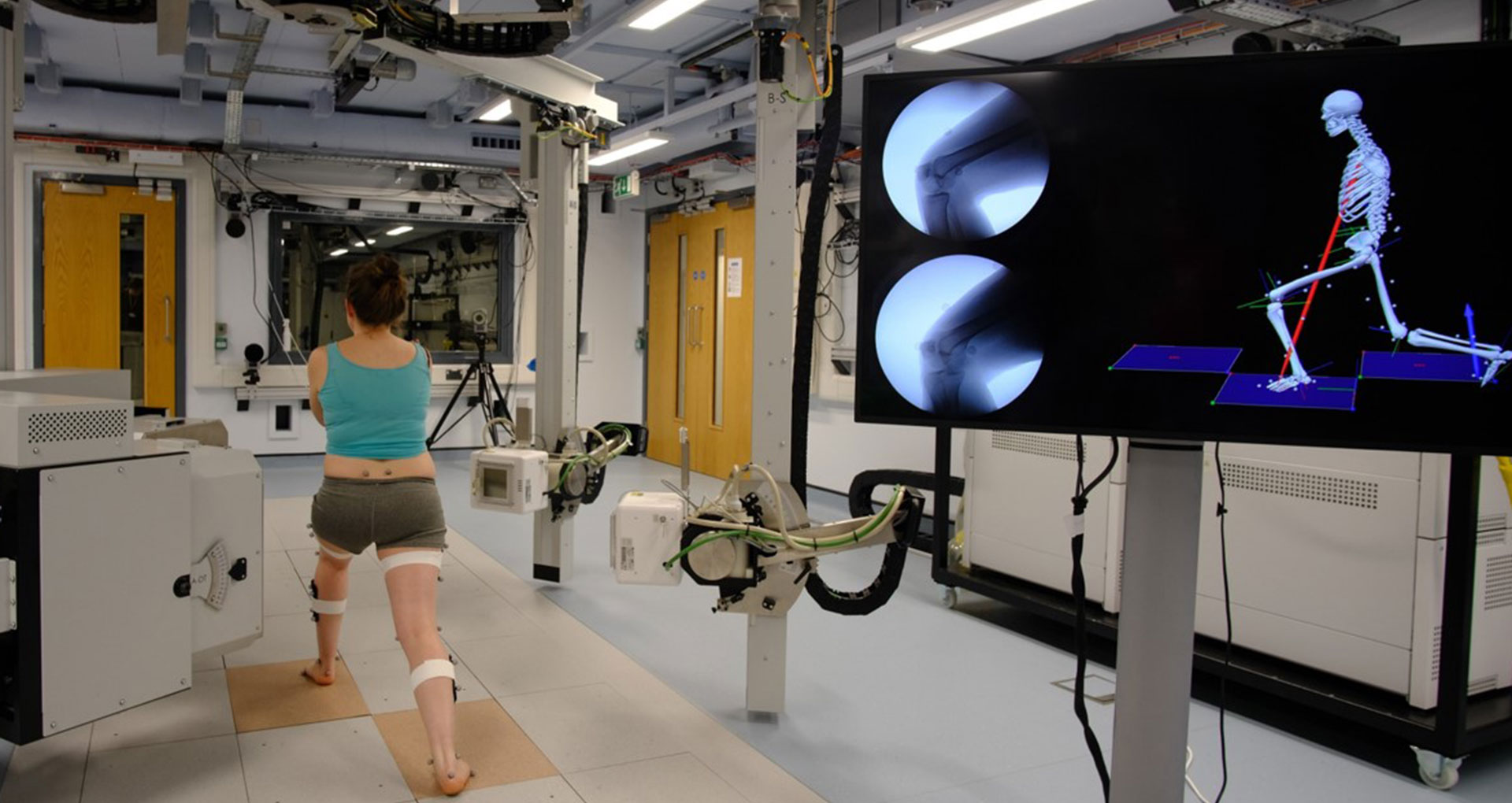
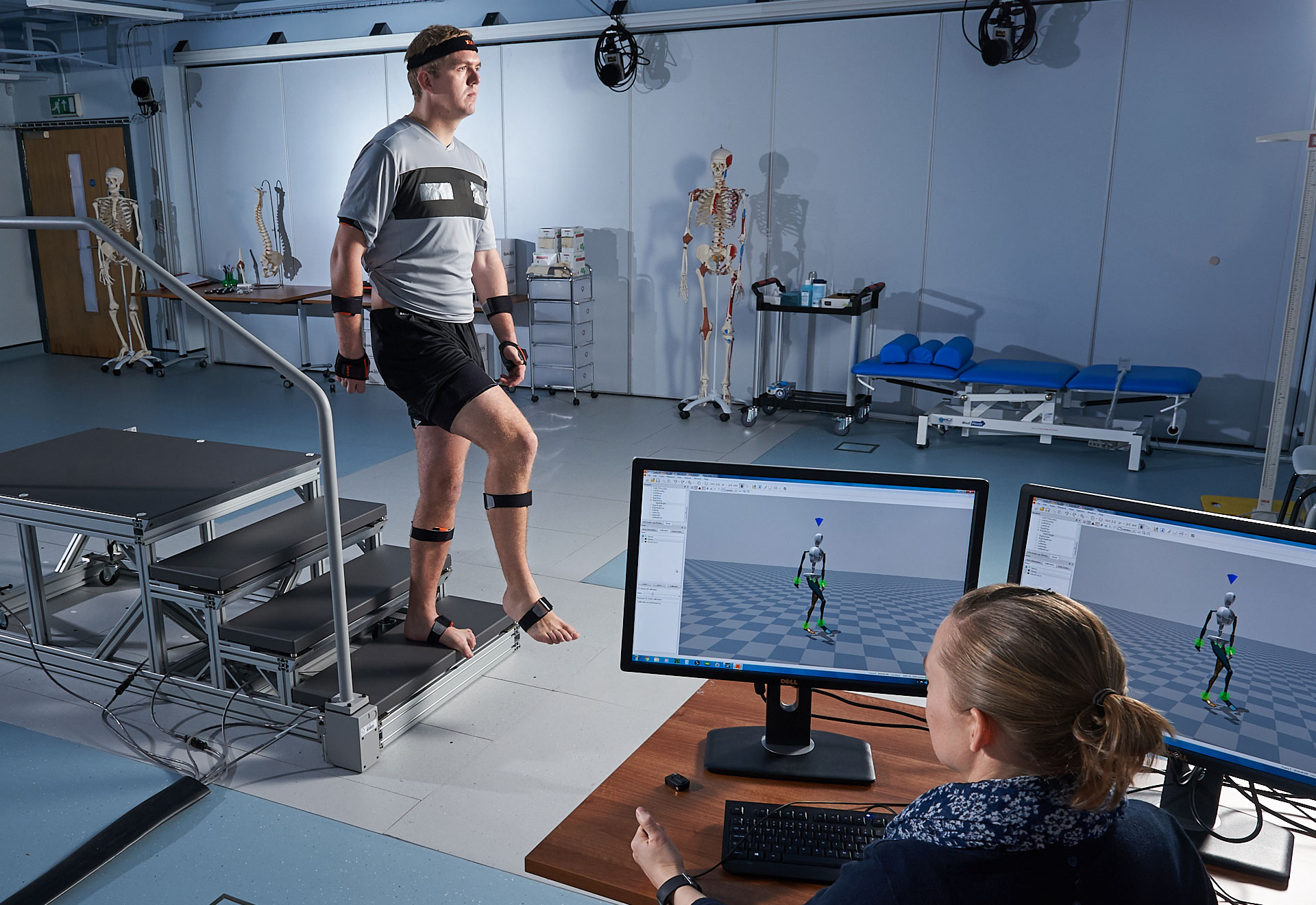
Our Biomechanics and Bioengineering Research Centre in Wales
The Centre was established at Cardiff University in 2009 with £4.5 million infrastructure funding from Arthritis UK to build capacity, address unanswered scientific questions, seek additional funding, embed patient and public involvement and build networks. Since then, under the leadership of Professors Duance, Caterson and Sparkes, the Arthritis UK Biomechanics and Bioengineering Research Centre has led a unique, interdisciplinary programme of research and translation aimed at helping people with musculoskeletal conditions live better.
3. Unlocking new osteoarthritis causes and treatments
Why is this important to people with arthritis?
The way our joints are loaded influences our risk for developing osteoarthritis. However, it’s unclear how abnormal movements or loads increase the risk of osteoarthritis developing and progressing over time. Centre research is exploring load-specific mechanisms underlying osteoarthritis using samples and models to find biomarkers and targets that could potentially treat, halt or prevent the disease.
Genes that explain why women feel more osteoarthritis pain
To better understand mechanical causes of osteoarthritis and test potential treatments safely, Centre researchers have developed models that mimic osteoarthritis using cells from bone, cartilage and nerves, to complement the use of animal and human models. These models simulate human osteoarthritis-like conditions to understand what causes joint degeneration, pain and swelling, and ultimately causes osteoarthritis.
New knowledge
From these models, Centre research has shown that mechanical loading:
- Regulates over 7,500 genes in bone associated with osteoarthritis-related pain, inflammation and degeneration.
- Regulates over 200 genes linked with nerve activity and growth.
- Regulates genes linked with pain in bone cells called osteocytes in women more so than men. This could help explain why women with osteoarthritis are twice as likely to experience pain than men.
Preventing osteoarthritis after injury
A condition called post-traumatic osteoarthritis (PTOA) can develop after a traumatic joint injury such as anterior cruciate ligament injury.
PTOA offers a unique opportunity to understand osteoarthritis, because the starting point of the condition is more defined than in general osteoarthritis (that is, it begins right after injury). This allows researchers to understand osteoarthritis in its earliest stages and track how the disease unfolds over time, expanding the window of opportunity to prevent or slow down its progression.
New knowledge
Centre researchers learned that there are two broad stages that lead to PTOA developing:
- rapid inflammation that starts damaging joint tissue immediately
- followed by long-term mechanical joint breakdown.
Knowing this means that treatments can be identified, studied and targeted to the development stage of the condition. AMPA and kainate glutamate receptors, proteins found on the surface of joint cells and expressed in osteoarthritic joints, are a potential target to treat PTOA. When blocked in mice, swelling and joint damage was reduced by up to 45%.
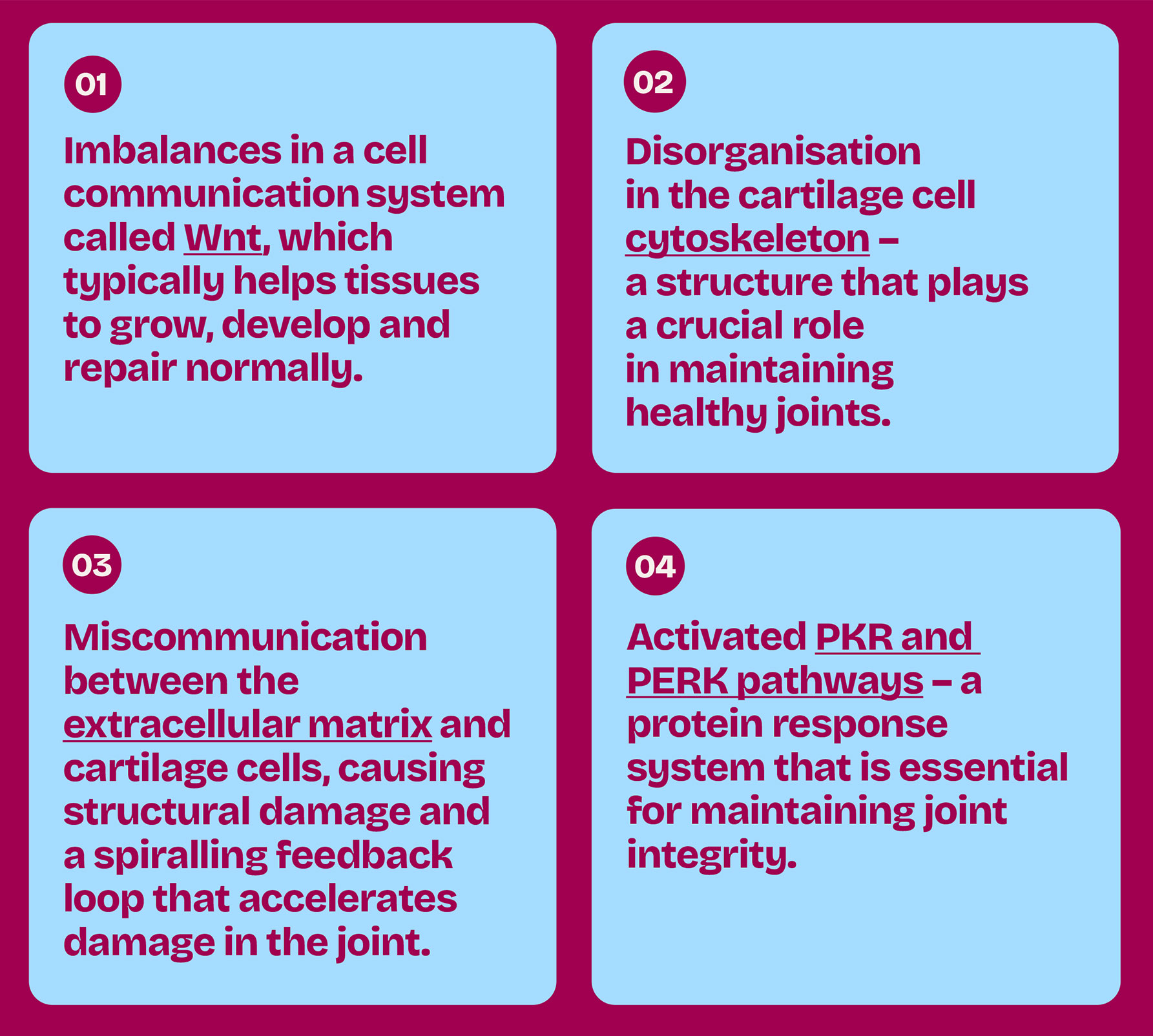
Damaging your joints disturbs the balance
As well as PTOA, joints can also experience other changes at the cellular level following mechanical overloading – changes that could reveal new treatment targets. Centre researchers have learned that mechanical overloading leads to:
New knowledge
Nutrition plays a crucial role in so many aspects of our health. So perhaps it’s no surprise that Centre researchers are also interested in potential links between joint heath and our diet. Two natural omega-3 fatty acids found in oily fish, called EPA and DHA, reduce cartilage breakdown induced by an inflammatory protein called IL-1β.
Previous research had shown that EPA and DHA can reduce the expression of genes that damage cartilage at a molecular level, but this was the first study to show these effects occurring in cartilage tissue.
4. New networks and next generation
Why is this important to people with arthritis?
Understanding and applying advances in biomechanics and bioengineering to the real-world is vital to improve the lives of people with arthritis. By training a strong community of interdisciplinary researchers, harnessing lived experience insights, sharing knowledge, building influence and forming global connections across disciplines, the Centre is helping this important field to flourish now and into the future.
New skills and influence
Training the next generation of researchers and experts is vital to lay the foundation for success in the future. By equipping emerging talent with new skills and knowledge, we lay the groundwork for life-changing breakthroughs.
"Without research and patient feedback, we are not going to be able to increase our knowledge of arthritis, diagnosis, treatment and possible future orthopaedic treatments. Ultimately, this would be detrimental for patients who are struggling with and require care for this debilitating disease."
New networks
Centre researchers have run over 30 public outreach events to connect with people with arthritis. They also ran a roadshow in Autumn 2024 which toured Rhos on Sea, Wrexham, Cardiff, Carmarthen and Aberystwyth, to shape and share the breadth of Centre research and its impact with physiotherapists and the public.
Research reach
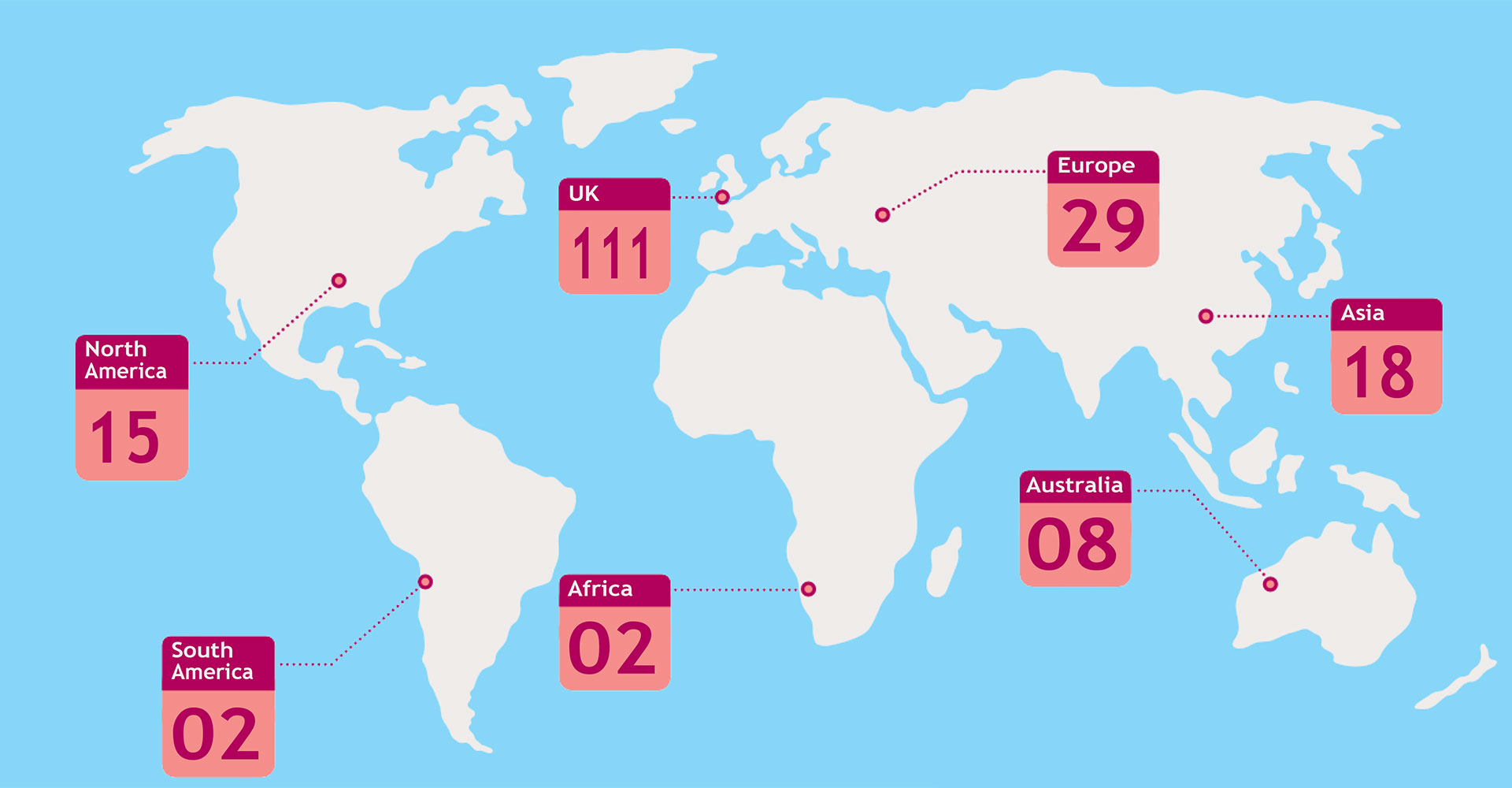
The Centre has 185 global collaborators, spanning health, industry and academia, across 28 countries.
"The Biomechanics and Bioengineering Research Centre has been a leader in cross-disciplinary research as we believe that the best way to tackle the problem of arthritis and other musculoskeletal disorders is through working together and sharing expertise."
Download the report
Download the Biomechanics and Bioengineering Research Centre report as a PDF.
Download the reportDownload the report in Welsh
Download the Biomechanics and Bioengineering Research Centre report in Welsh as a PDF.
Download the report