
Does cracking your knuckles cause arthritis?
30 November 2025 Research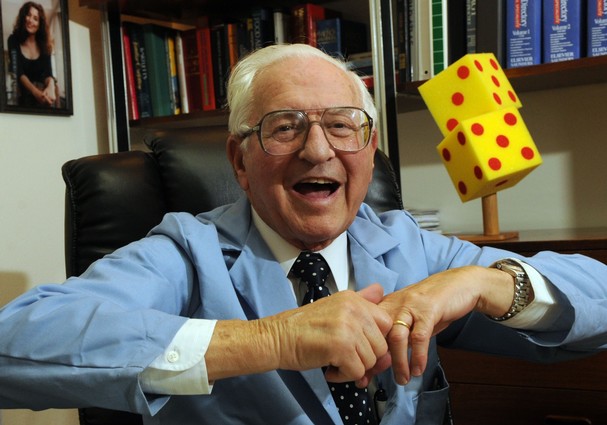
Is popping knuckles harmful?
Knuckle cracking or popping is a common habit done by over half of us, with many people claiming it releases tension and helps them to relax. The ‘cracking’ sound isn’t your bones cracking; scientists think it may be caused by gas bubbles forming and popping in the synovial fluid that lubricates your joints when the joints are moved apart.
Review of the clinical anatomy of knuckle cracking - what happens inside the joint
It takes around half an hour for the bubbles inside the joint to re-form which is why you can’t crack your knuckles again straight away after cracking them.
Here’s a study that shows how and why gas bubbles in a cracked joint pop:
A 1970s study into the science of joint cracking (PDF) (www.ncbi.nlm.nih.gov)
Does knuckle cracking cause arthritis: myth or reality?
We’ve all been told that knuckle cracking causes arthritis. But is that really true?
Fortunately, knuckle cracking has been the subject of a fair amount of research. One of the most famous pieces of research was conducted by a doctor in California, Dr Donald Unger, who set out on a mission to see if cracking knuckles really causes arthritis as many people claim.
In order to prove his theory, Dr Donald Unger, cracked the knuckles of his left hand at least twice a day for over 60 years whilst never cracking knuckles on his right hand. The knuckles on the left were cracked at least 36,500 times.
The results of his personal experiment were surprising. Decades later, he took X-rays of both his hands and found there was no difference between his hands and no signs of arthritis in his left hand.
Dr Unger concluded that cracking knuckles does not cause arthritis. He stated:
“There is no apparent relationship between knuckle cracking and the subsequent development of arthritis of the fingers.”
Dr Unger even won an IgNobel award in 2009 for his research and his contribution to the scientific community. The "ignoble" Nobel Prize is awarded to "honour achievements that first make people laugh, and then make them think".
Other similar studies have also found no evidence to support that cracking your knuckles causes arthritis.
A study on the correlation between knuckle cracking and hand osteoarthritis
@arthritis-uk
Does cracking knuckles harm your joints?
In one study, published in 1990, of 300 patients of similar age with no evidence of arthritis, knuckle crackers were more likely to have hand swelling and a weaker grip.
The study concluded that habitual knuckle cracking impacts hand function.
A study that shows possible long-term effects of knuckle cracking - BMJ
So, if you crack your knuckles, it's unlikely to give you arthritis but you might want to think about the long-term effects on your joints.
If you have swelling or stiffness in your hands or fingers that you can’t explain and that doesn't go away in a few days, or if it becomes painful to touch your joints, talk to your GP. The earlier you get a diagnosis and start the right type of treatment, the better the outcome will be.
If you need some help and advice, ask AVA our Virtual Assistant or if you would like to speak to someone, our Helpline team is ready to take your call.
Related information
-
Exercises for the fingers, hands and wrists
Six simple exercises to ease pain and help with problems in your fingers, hands and wrists.
-
Osteoarthritis of the hand and wrist
Osteoarthritis (OA) of the hand and wrist | Arthritis UK
-
Hand and wrist pain
Hand and wrist pain is very common and is often not serious or long-term, however there are several types of arthritis that cause pain in the hands and wrists.