
Managing the stairs if you have arthritis
How to make using the stairs easier
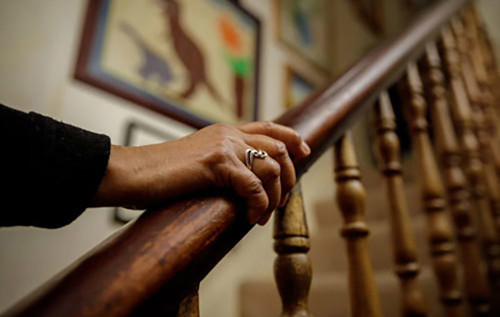
If you struggle to use your stairs, there are a number of things you can do:
- If you have the space and the facilities to do so, you could rearrange your living space so that you only use the ground floor.
- Move to a bungalow or ground floor flat.
- Install adaptations, such as grabrails, an extra stair rail or stairlift.
Before you make a decision, make sure you get some professional advice from an occupational therapist about what your needs are and speak to your local council about the grants available.
Stair rails
There are quite a few options when it comes to stair rails. When installing them you should try to make sure each end extends to just past the bottom or top of the stairs, so that you have a steady anchor point to grab hold of.
Most staircases will already have handrails installed, but if it’s not long enough to provide an anchor point, you might want to consider extending them. Your local DIY store will likely sell handrails which can be used to extend the existing rail.
There are a wide variety of stair rails available for all shapes and sizes of stairs. You can get short grab rails installed over just a couple of stairs, and rails that are designed to bend around the upright post of the stair banister.
You may even want to think about installing stair rails that move with you. These rails have a bar that folds down that you can grab hold of and slide along the stair rail. They are designed to stop moving when a sudden movement is made, so they can hold you steady if you lose your balance.
If you need a trader to make any changes to your home, it’s a good idea to check if your local council runs a trusted trader scheme. They’ll help you find a reliable trader that will do a good job at a fair price.
Stairlifts
You can get stairlifts to fit pretty much every type of staircase. The shape of the track depends on the staircase, but ones with straight tracks are generally cheaper than curved tracks.
There are a wide range of designs to suit your needs. Some you can use standing or perching. Others have seats and some have wheelchair platforms.
Remember to try before you buy, as everyone’s needs are different. Here are some features to consider:
Seat height
Some chairs have adjustable seat heights. If you have any hip, knee or back problems, the height of the stairlift seat is important. You should make sure the seat height is right for you at both the top and bottom of the stairs.
Swivel seats
Swivel seats can be manual or automatic and are designed to make it safer to get on and off a stairlift. They work like an office chair and swivel at the top of the stairs, so you end up facing the landing. These seats also have armrests for you to grip, making them easier to get out of.
Control switches
When it comes to controlling the stairlift, you can choose between different types of controls, including joysticks or rocker switches. Depending on how arthritis is affecting your hands, you might prefer to use one design over another, so try them out and see what works best for you.
Hinged rails
If there’s a door that could be blocked by the track of the stairlift, you might want to consider installing a hinged rail that can be folded away. If you’re unable to fold it away manually there are motorised hinges available.
Foldable chairs
Some stairlifts make it difficult for others in the house to climb the stairs. In these cases, the footrest, seat and armrests need to be folded out of the way. You can select a design where the footplate and armrests automatically lift out of the way when the seat is folded up.
Although stairlifts with wheelchair platforms fold away, these types of stairlifts can take up a lot of room and often staircases aren’t wide enough for them. So, you might have to consider if a through floor lift would be a better option.
Safety
Stairlifts should have sensors that stop it from moving if they sense an object is in the way.
If you think you may have trouble with young children wanting to operate the lift, you can get models that can be turned off with a key.
Don’t take a walking aid with you on the stairlift. It might catch on the steps or banisters while the lift is moving. Ask for another walking aid so you can have one at the top of the stairs and one at the bottom. If you use a wheelchair you might need to think about having one upstairs and one downstairs.
Through-floor lift
If there isn’t enough room on your stairs to install a stairlift, a through-floor lift is another option. It can be placed in a living room or hall and go up through the ceiling to a landing or bedroom.
However, you will need more space than you would for a stairlift, and you’ll have to make some structural changes to your home.
There are two types of through-floor lift:
- the standard lift that you see in most public buildings, which must be enclosed in a shaft
- vertical lifts without a shaft.
Vertical lifts without a shaft are a common option in homes, as they require fewer modifications to the rest of the house. They are most commonly used for wheelchairs, but standing and sitting versions are also available.
Short-rise lifts
Another option, for smaller changes in elevation, is a short rise lift. These can be fixed in place or portable. Mobile ones are particularly handy if you don’t often need to access the other level, as you don’t need to make any structural changes to the rest of the building.
If you decide to get a portable one, you should check how easy it is to move the lift around your home.
Stairlift costs
Purchase
Stairlifts are usually cheaper than through floor lifts as they are easier to install and require fewer modifications to the house.
You may even be able to get a second-hand stairlift, but try to get it straight from the manufacturer or an authorised organisation to make sure it’s in good working condition, under warranty and suitable for your house.
Always get a few quotes from different suppliers so you can do a price comparison. But make sure you won’t be charged extra for the quotes.
Stairlifts typically range from £2,000 to £6,000, but can be more. The price will vary depending on the size and shape of the staircase, as well as the type of stairlift being installed. If your stairlift has a straight track, you’ll usually be able to sell it once you no longer need it. Selling curved tracks can be trickier.
Lifts are classified as a major adaptation. If you need financial help to afford one, you should apply for a Disabled Facilities Grant from your local council.
There are also charities and organisations that may be able to help. Turn2us is a charity that provides financial support. You can find out on their website what grants you could be eligible for.
Running costs
The cost of running a stairlift is very small. In fact, manufacturers claim that it’s cheaper than owning a kettle. Maintenance can be more expensive and varies from make to make. But it’s important that your stairlift is inspected at least once every six months and serviced every year.
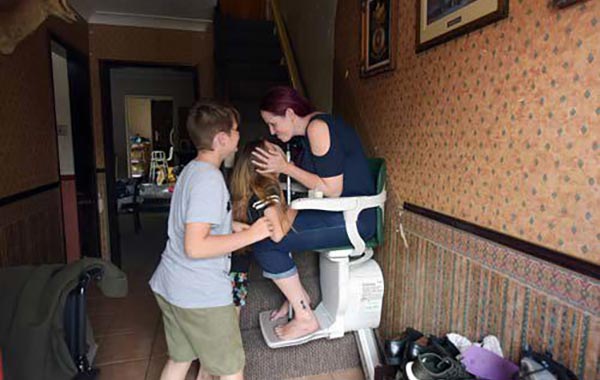
Stairlifts: How they help and buying advice
If you're finding climbing stairs difficult, installing a stairlift in your home may be an option. Stairlifts can significantly reduce chronic pain by eliminating the physical strain of climbing stairs, increase your independence and reduce the risk of falling.