
Aids and adaptations
How to get new equipment
Please note that products and brands mentioned are from suggestions by people with arthritis. We do not receive money or sponsorship by featuring them.
There are similar products produced by other brands, and we’d suggest looking around to see what’s available.
If you’re able to, ask for advice from an occupational therapist and try out any products before you buy. We cannot be held liable if any product featured in our content is unsuitable for you.
Tips for every room around the house
- Attach a basket to the inside of your letterbox.
- Move electrical sockets higher up the wall with an extension cable or by getting them rewired.
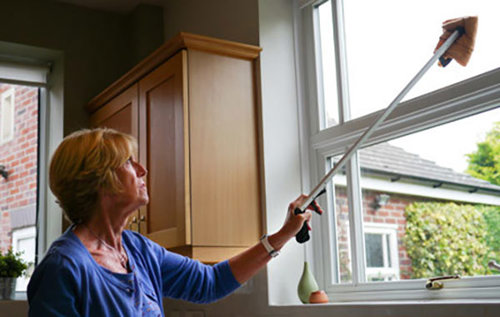
- Try using a reaching stick or pick-up stick. These can also be useful to remove clothes from inside the washing machine.
- Use a laundry basket that has a handle and wheels.
- Raise your washing-up bowl by putting it on blocks or another upturned bowl in the sink.
Housework and DIY
- Use a towelling mitt for dusting or cleaning mirrors and windows, as it’s easier than gripping a cloth.
- Use a long-handled dustpan and brush.
- Choose a lightweight ironing board that is easy to open and close. You could also think about installing a wall-mounted ironing board.
- Tabletop ironing pads can be handy for smaller items and saves getting an ironing board out.
- Pad the handles of tools to make them easier to grip and buy lightweight, power-assisted tools, such as drills or screwdrivers.
Making switches, plugs and keys easy to use
- Large rocker, pull-cord or touch-operated light switches are easier to use.
- Electric or gas fires are easier to turn on if the control knob is located at the top. Or consider getting a model that uses a remote control.
- You can buy specially designed grips to help you turn dials and knobs, and make plugs easier to pull out.
- Key turners can help with inserting and turning the key in the lock.
- Wrapping an elastic band around rounded door handles can make them easier to open.
Avoiding trips and falls
- Remove any loose mats or carpets.
- Make sure your stairs, hall and landing are well lit.
- Make sure you have enough space to get between or around your furniture.
- Fix a grab rail by the front door to help you go in and out.
- Think about altering your doorstep, especially if mobility is a problem or if you use a walking aid or wheelchair.
Medication management
- If you have trouble opening childproof containers, your pharmacist might be able to put them in a more suitable container for you.
- Pill removing gadgets are available if you struggle to get your pills out of the packet.
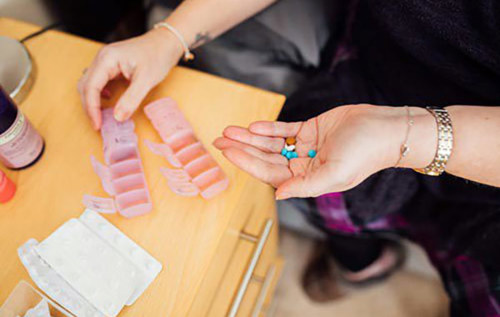
- You might find it handy to organise your pills in a box containing separate compartments for every day of the week.
Technology and leisure activities
Using phones and tablets
- Many smart phones and tablets can be used with a stylus to make it easier to type.
- Smart phones now have voice activated features which include message dictation, web searches and hands-free phone calls.
- Try to get a cover that makes your phone or tablet easier to hold. Many covers also double up as stands.
- Gadgets, such as a PopSocket, can make it easier for you to hold your smartphone.
- Think about purchasing touchscreen gloves to use your phone more comfortably when outdoors during the colder months.
Personal alarm system
A personal alarm system is a device that can call for help if you fall or have an accident at home. They can be kept in a pocket, pinned to your clothes or even worn around the neck or wrist.
Smart speakers
Smart speakers, such as Amazon’s Alexa devices, Google Home or the Apple HomePod, can be used to make your home much more accessible. They can play music hands-free, as well as control your lighting and other devices in your home. You can even use them to make phone calls without using your phone.
Some speakers can also function as a personal alarm system - you can ask the speaker to alert someone if you have an accident and can’t make it to the phone.
Using a computer
Voice activated software can be a good alternative to typing on a keyboard. You could try downloading a free version of the software before deciding if you need to pay more for a professional version.
Try resting your wrists on a sponge bar in front of the keyboard – mouse mats are available with similar cushioning if you feel you need the extra support. Ergonomic mice are available which can be held vertically. Some also have trackballs instead of scroll wheels, which can be easier to use.
Have a look at our working with arthritis page for more information on changing your workstation and getting support at work.
Reading and writing
- Look for a pen that has a chunky grip which is easy to hold.
- Try resting your book or newspaper on your lap or on a table to avoid straining your fingers.
- Rest a book on a beanbag, lap tray or book rest.
- Think about using an e-reader or tablet to get digital copies of books and magazines, as these may be easier to hold than a book. You can also get covers that double as stands so you don’t have to hold them.
The kitchen
Top tips for the kitchen
- Use lightweight crockery and cups with large handles that can be gripped with several fingers.
- Insulated or pedestal mugs can be held with both hands, because you can support them underneath without burning yourself.
- A trolley could be useful for moving heavy plates of food.
- Most supermarkets sell pre-prepared food, such as chopped vegetables and grated cheese.
- Frozen vegetables will save on preparation and often have a similar nutritional value to fresh vegetables.
- Having some pre-prepared ingredients or ready-made meals in the freezer can be handy when your arthritis flares.
- Consider purchasing a washing-up bowl with a drainer in, so that you can empty the bowl of liquid without having to lift it.
Gadgets for preparing food
- Kettle tippers – you can even bring water to the kettle in a lightweight plastic jug to avoid having to move it.
- Hot water dispensers are a good alternative to using a kettle, but you’ll still need to fill it up using a plastic jug.
- Hand-held electric blenders.
- Easy-grip cutlery with chunky handles.
- You can also try a Mezzaluna knife – which is a curved blade with a handle on each end. It’s most commonly used to chop herbs, but you can also use it to chop meats or cheeses.
- Non-slip mats.
- Wide handled potato peelers.
- A food processor for chopping, grating and mixing.
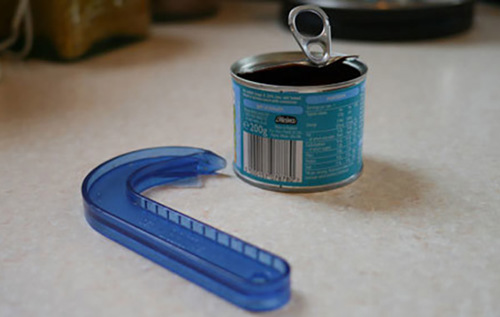
- Ring pull or electric can openers.
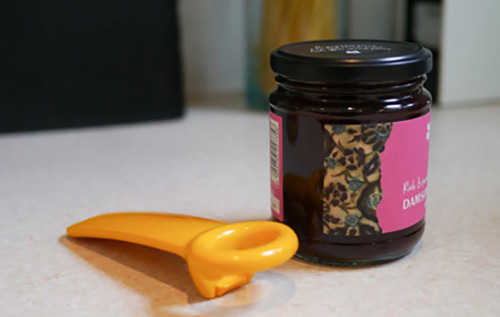
- Easy-grip bottle openers and jar openers.
- Spring-loaded scissors that open by themselves are good for packets.
You could also try:
- making a wooden spoon, knife and other handles bigger by adding some foam tubing
- wrapping an elastic band or a tea towel around tight bottles or jars, to help pry them open
- placing a cloth under a bowl, so that it doesn’t slide around if you want to use both hands to mix
- making individual drinks in the microwave.
Cooking tips
- Use a lightweight saucepan with two handles.
- Use a vegetable steamer – they can be lighter than a saucepan because less water is needed.
- A tabletop slow cooker can be easier to use than a casserole dish that you place in the oven.
- Use a slotted spoon to remove boiled vegetables from the saucepan.
- Use a ladle to remove soups and stews from the saucepan.
- Use a wire chip basket, placed in the saucepan first, to lift out vegetables when cooked.
Work surfaces and cupboards
Reaching into very low or high cupboards can be hard, particularly if they’re cluttered or stacked several layers deep.
The following tips might help:
- store items you use often within easy reach
- use plate racks, rather than piling crockery up
- use step-shelves inside cupboards, so that you can easily see and reach jars and tins.
Buying new kitchen equipment and appliances
When buying new equipment for your kitchen, ask yourself the following:
- Are control knobs easy to reach, grip and turn, push or pull?
- Is the appliance easy to use?
- Will you be able to clean and maintain it easily?
- Can you lift and move it if you need to?
Tips for redesigning your kitchen
- Have wall-mounted cupboards moved to a lower position.
- Fit large handles or sliding doors.
- Have drawers mounted on rollers, which run more easily than standard drawers.
- Have shelves that slide or rotate out when you open the door.
- Make sure all the cupboards and surfaces are at the right height.
- Have a wall mounted oven with a drop-down door to make it easier to reach in and remove items.
Top tips for food shopping
- Online shopping is a really convenient way to get food. Most supermarkets offer a free click and collect service, but you can also get your shopping delivered to your door for a small fee.
- Plan to shop on a day when you don’t have many other things to do.
- Don’t try to carry too much in one go.
- Use shopping bags with strong handles, which are easier to carry – you should be able to buy these at supermarkets.
- Adapted silicone bag handle grips stop carrier bags digging into your fingers.
- Ask for help at the supermarket, especially with packing and loading into the car.
- Consider using a shopping backpack, or a trolley on wheels for short trips on foot.
- Ask friends or neighbours to shop for you.
Many large stores provide wheelchairs for customers. Some councils run Shopmobility schemes, where you can hire wheelchairs and scooters to go shopping or around town.
Visit the government’s webpage on community transport services and Shopmobility to find out what services are available in your area.
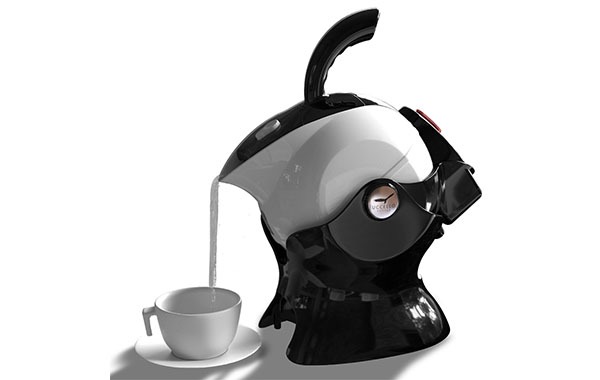
Arthritis UK Shop: The Uccello tipping kettle
The Uccello Kettle was specifically designed for those with limited reach, mobility, dexterity, and strength. Unlike other kettles and kettle-tippers, the circular shape of our Uccello Kettle, moves around the body of water to create a smooth effortless pour, so you don't have to lift, strain or balance - simply tilt to pour.
The bathroom
Top tips for the bathroom
- Liquid soap in a push-down pump bottle is easier than using a bar of soap.
- You can also try refilling a suitable pump bottle with your favourite shampoo, conditioner or face cleanser.
- Try fattening the grip of a toothbrush by wrapping an elastic band around it.
- A thick towelling dressing gown is much easier than struggling to dry yourself with a bath towel.
- You may find using a microfibre towel helpful, as they’re much lighter than normal towels and you don’t have to rub yourself. They can be found in outdoor pursuit shops.
- Use a lightweight electric razor.
- Use an electric toothbrush.
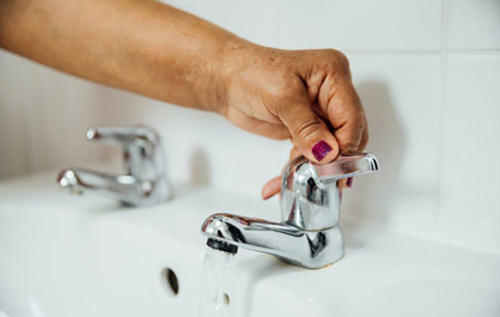
Gadgets and aids for the bathroom
- Lever taps are easier to use than regular taps. You can buy these, or fit tap turners on to existing taps.
- You can get long-handled versions of most equipment, including long-handled sponges, hairbrushes, combs and toe wipes.
- A long flannel strap with rings at either end can be great for drying those hard to reach places.
- A toothpaste squeezer might help.
Getting in and out of the bath
If you find getting in and out of a bath difficult, think about getting some of the following:
- a grab rail
- a non-slip mat
- a bath board and seat
- a powered bath seat lift
- a walk-in bath – although these can be very expensive.
Before you buy a new walk-in bath or a powered bath seat it’s worth speaking to an occupational therapist to ensure you get a suitable model for your needs.
Taking a shower
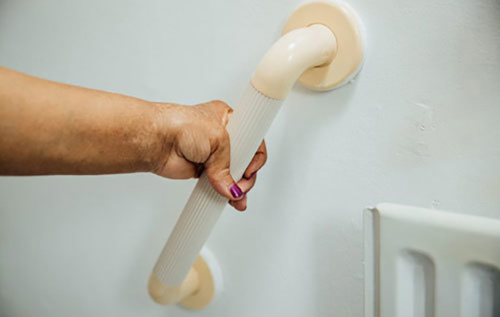
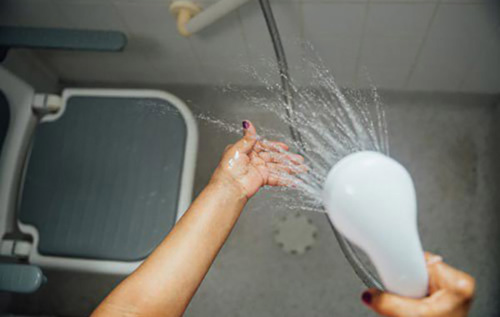
- Grab rails and fold-down shower seats can help you shower more comfortably.
- Free-standing shower stools may be suitable if wall-mounted seats aren’t an option.
- Walk-in showers or wet rooms can improve access, but may
involve higher costs.
Using the toilet
Equipment that can help includes:
- a grab rail beside the toilet
- a raised toilet seat
- a toilet frame
- a bottom-wiping gadget
- a portable bidet which fits onto a standard toilet pan
- an automatic flushing toilet with built-in bidet, which washes and dries you
- gadgets that convert toilets into automatic flushing toilets.
Periods
Inserting and removing tampons or menstrual cups might not be easy, especially during a flare. But there are alternatives that should be easier to use.
A number of different companies have now designed easy to use menstrual cups to make them as easy to use as tampons. So have a look around and see if there are any which might be suitable for your needs.
Period proof underwear can also be a good option if you want to avoid menstrual cups, but still want something that’s reusable.
Aids and adaptations: Christine's story
The bedroom
The bed
Making a bed can be difficult. A common problem is shifting the weight of the mattress. This can make tucking in bedclothes painful and difficult. You may find it helpful to have a lightweight mattress or to use a mattress pad on top of your ordinary mattress. This means you only need to lift a thin pad to tuck sheets under. Try using fitted sheets and a duvet.
Using an extra sheet under the duvet will mean you don’t have to change the duvet cover as often. Some duvet covers come with bigger buttons, rather than small poppers at the base.
You could also try using easy grip pegs to hold the duvet in place on the bed, to make it easier to pull the cover on. Use the pegs to hold the top of the duvet and duvet cover together so that you can shake the rest of the duvet into shape.
The mattress
The perfect mattress should provide the right balance between comfort and support for your spine. There isn’t a ‘one size fits all’ approach – while some people might prefer a hard mattress, softer ones can be just as good. It all depends on your personal preference and your condition.
A mattress has a set lifespan, and when that’s over, it will sag. If you can feel the springs easily or if it’s lumpy, saggy, or floppy, it’s probably time to replace it.
You may be advised to put a board under a sagging mattress. This is poor advice and won’t improve how it works. In fact, a board under the mattress can actually create painful conditions at the pressure points of the hip and shoulder.
Before you buy a new mattress, do your research. Go to a good retailer who can discuss the features and benefits of their products.
Don’t be shy about trying out several beds in the store, particularly in the position you sleep in. If you share a bed with someone, take them along too, so you can find a mattress that suits both of your needs. And take your time – physiotherapists recommend trying a mattress for 20 minutes before buying.
Many people find memory foam mattresses or toppers helpful. A common recommendation is to buy a firm or orthopaedic mattress. But whether this is right for you depends on many factors, including:
- your weight and build
- your size and age
- the way you sleep
- the sort of aches and pains you have.
Pillows
Choosing a comfortable pillow can help reduce neck and shoulder pain. Shaped or memory foam pillows can also be useful.
There’s no specific type or number of pillows that will suit everybody. What’s best for you will depend on how you sleep and what you find most comfortable.
The best thing you can do is find a position in which your neck is aligned with your spine. Be careful not to prop your pillow too high, as this can put your neck at an uncomfortable angle.
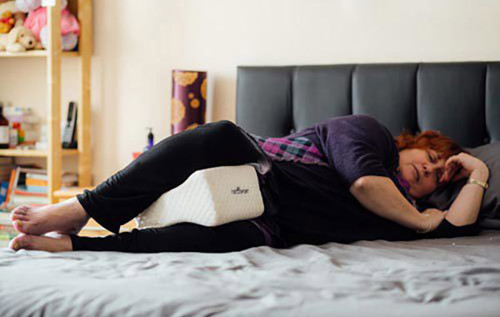
A pillow placed between your legs when lying on your side can provide extra support if you have any hip or knee pain. Some people find long body pillows to be particularly comfy. There are also specialist pillows available, which are moulded to the shape of your legs and can provide more support than an ordinary pillow.
Dressing
It’s usually easiest to sit down while putting your clothes on, and there are a wide variety of gadgets to help, including:
- a buttonhook for fastening buttons
- long-handled shoehorns
- a dressing stick
- sock or tight aids to help you pull them onto your feet and up over your legs
- a front fastening bra can be easier to manage. Bras without fastenings that you pull on over your head or pull up from the floor are also available.
You can adapt clothes by replacing some fastenings with Velcro. Try placing a zip pull tag, small piece of ribbon or key ring on a zip to hook your finger through.
Some companies will be able to fit shirts and blouses with magnetic buttons.
For information on footwear and what you should look for in a good pair of shoes visit our footcare and footwear page.

Getting ready
- Using a hairdryer or straighteners may be easier if you sit at a table and support your elbow on a pillow or cushion.
- Think about getting a hair dryer brush so that you can dry and style your hair with one hand.
- Try hands-free hairdryer holders or stands.
- Use a small make-up sponge to apply face cream if you find it difficult to do with your fingertips.
- Wrap elastic bands around makeup pencils or brushes to make them easier to grip.

Managing the stairs if you have arthritis
If you struggle to use your stairs due to painful joints or reduced mobility, there are a number of things you can do to make using your stairs easier and safer, such as using grabrails or installing a stairlift.
Local authorities
You may be able to get gadgets and equipment from your local authority.
Your local council may call equipment or modifications to your home ‘aids and adaptations’ or ‘community equipment’.
An aid is any equipment that can help you manage your everyday tasks. This could be:
- an easy-to-use electric can opener
- a mattress topper to help you sleep
- kettle tippers that make it easier to pour water.
Adaptations are physical changes, or home modifications, that can be made to help you get around your home. This could include:
- grab rails
- a level access shower
- a ramp
- a stairlift.
Local authorities have a duty to care for the people who live in their area. They should be able to tell you which types of care you are eligible for, and whether you will have to pay for this care or not.
Your local authority may also be able to arrange for you to have support in the home and advise you on local schemes and services that can help.
Help for equipment in England
In England, local authorities have to provide aids and home adaptations, up to the value of £1,000, to anyone who can’t perform two acts of daily living, like eating, washing or going to the toilet.
If there are things you struggle to do at home and this impacts on your quality of life, ask your local council for a free needs assessment. Everybody is entitled to one, and you could be eligible for free equipment.
You can find your local authority’s home adaptations service by entering your postcode at this website.
Help for equipment in devolved nations
For information on the support available for aids and adaptations in Scotland, Wales or Northern Ireland visit the following websites:
If you need to make adaptations to your home, you may be able to access financial assistance from your local authority. The Disabled Facilities Grant is designed to help people living with disabilities to meet the cost of making major adaptations to their home.
Eligibility for a Disabled Facilities Grant differs from eligibility for aids and adaptations in two important ways:
- The legal definition of ‘disability’ is different.
- The DFG is means tested, whereas eligibility for community equipment isn’t.
If you live in England or Wales you can apply for a disabled facilities grant with your local authority by entering your postcode at this website.
If you live in Northern Ireland you should contact your local Health and Social Services Trust. You can find out more on this website:
Disabled facilities grants aren’t available in Scotland.
Make sure you apply for the grant before you start any work on your home, or your application could be rejected.
To find out more about disabled facilities grants see our factsheet Know your rights: Disabled Facilities Grants (PDF, 105 KB).
Getting advice from a professional
It’s a good idea to speak to an occupational therapist about your daily needs and the equipment available. You can ask your doctor to refer you to one or you can refer yourself.
An occupational therapist will be able to give you advice on the best equipment available. They can also give you tips on ways of pacing yourself and changing the way you do tasks to make them easier.
Their advice should help you manage fatigue, reduce your pain and can help you keep your independence.
New gadgets can make daily tasks easier on your joints. But stopping regular movements, no matter how small, could create stiffness and loss of movement. So, make sure you’re still exercising your joints in other ways to keep them strong and mobile.
For more information on staying active visit our exercise pages.
Purchasing new equipment
If you’re not eligible for support, or prefer to purchase your own products, you’ll be able to get many of the gadgets mentioned here online, as well as in supermarkets and local hardware stores.
Make sure you compare prices at a few different places before you buy anything. Where possible, try out the equipment before buying it, to make sure that it’s right for you. If you can’t do this in store, you can try out items and get expert advice at demonstration centres. These can be found in Disabled Living Centres, social services centres, and occupational therapy departments. Visit Living Made Easy for information on your nearest centre.
Most of the staff at Disabled Living Centres are occupational therapists or physiotherapists, who can give impartial advice. It can be a good idea to go with a friend or relative to help you decide on the best equipment for your needs.
AskSARA
AskSARA gives helpful advice on gadgets and equipment to make everyday activities easier. The website will ask you to select the topic you’re interested in and answer a few questions before giving a personalised report full of useful advice and products that may help you.
Other organisations that can help
There are many organisations and charities that will be able to offer advice and support for people wanting to get started with new equipment.
The British Red Cross runs an equipment loan service for wheelchairs and other specialist equipment, and Age UK helps with shopping and housework in some areas.
Age UK also offers handyperson services for help with gardening and small household jobs, such as changing the batteries on smoke alarms. Alternatively, your local authority is likely to be able to recommend a reliable handyperson service.
There are also charities and organisations that can adapt existing items in your home or even create new equipment tailored to your specific needs. While many places may charge a fee, there are charities which provide their services for free. Have a look at a charity called Remap, who provide custom made equipment for people with disabilities. Their services are also completely free.
Your local fire service is likely to offer free safety checks for your home. They can test, fit and relocate smoke alarms as well as provide new batteries – all free of charge. They can also help you work out an escape route and will check for any potential trip and fire hazards.
These and other voluntary organisations which can help are listed in the ‘Related organisations’ section of this webpage. You may also find others online or in your phonebook. You can also ask your local authority, Social Services department or the Citizens Advice Bureau.
Related organisations
Age UK
The country’s leading charity dedicated to helping everyone make the most of later life.
Helpline: 0800 678 1602
www.ageuk.org.uk
AskSARA (part of the Disabled Living Foundation)
Ask SARA gives helpful advice on gadgets and equipment to make everyday activities easier. The website will ask you to select the topic you’re interested in, for example cooking, and answer a few questions before giving a personalised report full of useful advice and products that may help you.
https://asksara.livingmadeeasy.org.uk
Disabled Living Foundation (DLF)
For a huge range of information on equipment available and advice on living independently.
Phone: 0300 999 0004
Email: enquiries@dlf.org.uk
https://livingmadeeasy.org.uk/
Living Made Easy (for information on Disabled Living Centres)
Europe’s largest trusted online comparison site for daily living equipment.
Phone: 0300 999 0004
www.livingmadeeasy.org.uk
British Red Cross
Helping millions of people in the UK and around the world get the support they need when crisis strikes.
Phone: 0344 871 1111
Email: information@redcross.org.uk
www.redcross.org.uk
Scope (formerly DIAL Network or Dial UK)
An independent network of local disability information and advice services run by and for disabled people, part of Scope.
Phone: 0808 800 3333
www.scope.org.uk
Disability Rights UK (formerly Disability Alliance, RADAR and the National Centre for Independent Living)
Led by people with diverse experiences of disability and health conditions, from different communities.
Phone: 0330 995 0400
Email: enquiries@disabilityrightsuk.org
www.disabilityrightsuk.org
National Rheumatoid Arthritis Society (NRAS)
A charity dedicated to supporting people with rheumatoid arthritis.
Helpline: 0800 298 7650
Email: enquiries@nras.org.uk
www.nras.org.uk
Remap
Helps disabled people of all ages to live more independent lives using a network of skilled volunteers who design and custom-make equipment free of charge.
Phone: 01732 760 209
Email: data@remap.org.uk
www.remap.org.uk
Foundations
The national body for home improvement agencies.
Phone: 0300 124 0315
Email: info@foundations.uk.com
https://www.foundations.uk.com/