
James' story: "I felt like I was gate-crashing the pensioner’s club."

Arthritis UK gave me a purpose
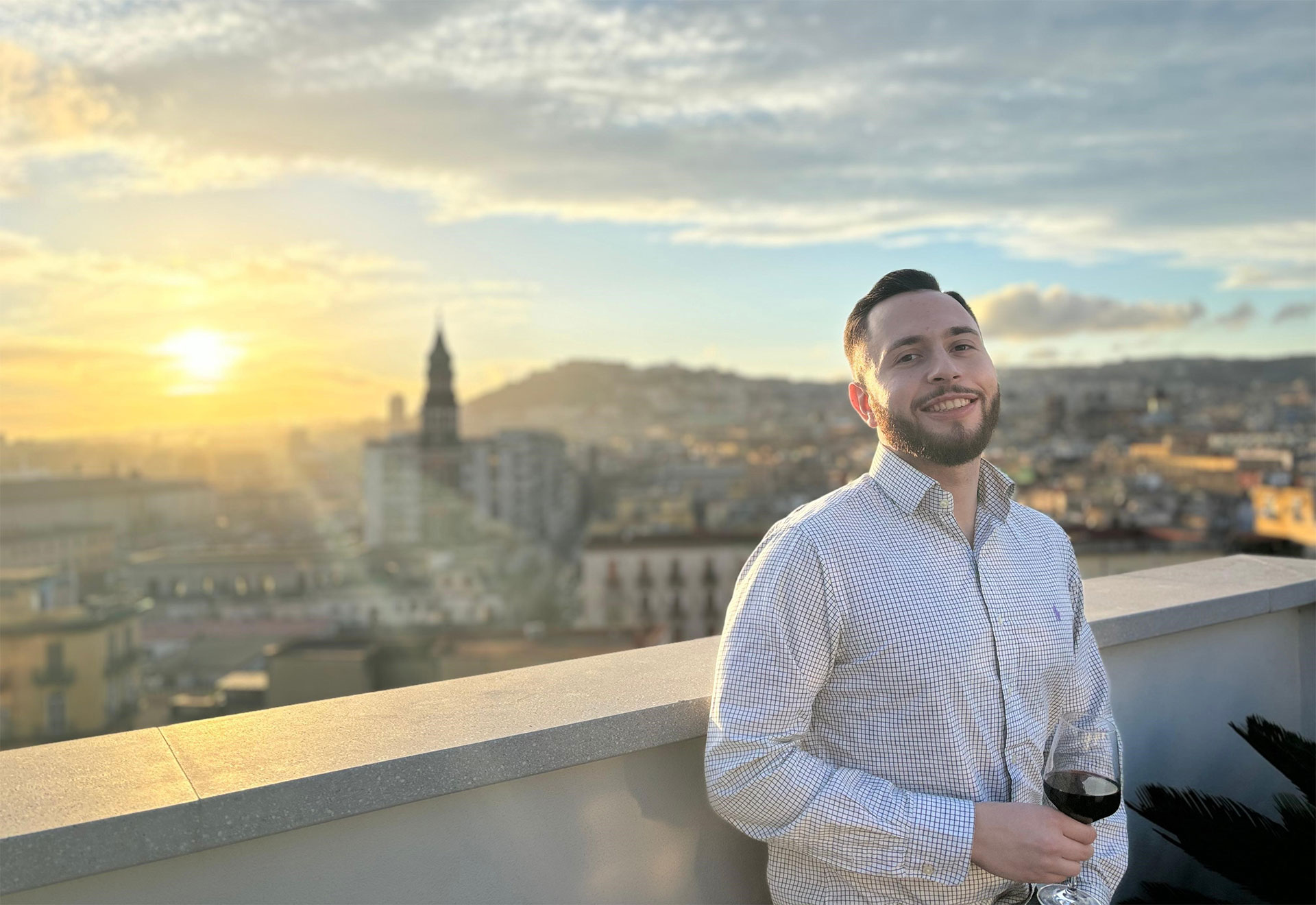
James Hollens, 31, from Croydon, was diagnosed with rheumatoid arthritis at 21, then axial spondyloathritis when he was 24. He says Arthritis UK helped him go from denial to acceptance, inspiring him to advocate for young people with arthritis and opening him up to a supportive community.
"Arthritis UK changed everything for me, gave me a purpose, opened the door to a community where there is so much love and support. I’ll always be very grateful.
My journey started just after finishing university. I was gearing up to move to China, doing a teaching qualification and working in a bar where I spent a lot of time on my feet so, when I woke up one morning limping, I just thought I’d overdone it.
Weeks went by, the limp got worse and I was in pain then, one morning, I woke up screaming, this gravitational force of pain every time I tried to move and my knees, ankles and feet all red and swollen. My dad literally carried me to A&E where they diagnosed cellulitis and gave me antibiotics.
Doctors ruled out arthritis
The pain and swelling got worse to the point where I needed crutches and I went back and forwards to the doctors getting misdiagnosed with a cyst, an infection. Nobody mentioned arthritis, I think even for doctors there’s still this stereotype that arthritis is for old people so they aren’t really looking at it.
"At first, the only other person I knew with arthritis was my Grandma and she was 93, I felt like I was gate-crashing the pensioner’s club."
Eventually, a rheumatologist diagnosed rheumatoid arthritis. I asked how we cured it and was told it’s something you have for life which was a shock. At first, the only other person I knew with arthritis was my Grandma and she was 93, I felt like I was gate-crashing the pensioner’s club.
Shock and denial around diagnosis
I was in denial, felt embarrassed about telling people to the point that I’d tell the most outrageous stories to explain my crutches, shark attacks, anything as long as it wasn’t arthritis.
I was given medication and they syringed fluid from my joints but it took a year to get back walking and I had to give up work. At first, I was put on methotrexate and given steroids but it was trial and error. I also focused on diet and exercise to help get it under control.
When I got back on my feet, I did go to China, first teaching but then in an office which was my first ‘sitting down’ job so when I started with back pain, I assumed it was that. The doctor gave me muscle relaxers and suggested a memory foam mattress.
I planned on backpacking around India during Chinese New Year but, when I got to the shop to buy a rucksack, I was hit with a crazy fatigue so got a cab and went home to bed. When I woke, I had that same gravitational pull of pain, everything swollen, my spine on fire. I couldn’t get out of bed.
My flatmate helped me to hospital but, unable to stand, they couldn’t scan me. They were going to send me home but I had a pain-induced panic attack so was admitted. After tests, they diagnosed axial spondyloarthritis and sent me, by cab, to a specialist hospital. With no Google in China, I had to message my mum to find out what this long, scary-sounding condition was.
Starting treatment for axial spondyloarthritis
At Chinese New Year, everything shuts down so they would not have been able to see me for two months. I was in too much pain to wait so booked a flight home the next day. My rheumatologist in London fast-tracked me but I had to wait for an MRI which found I had bulging discs so they focused on that at first.
I finally got a diagnosis six months after getting home and after trying anti-inflammatories which didn’t work. Then they put me on benepali (etanercept) which, luckily, worked for me. I’m still on that, and the methotrexate, and it’s doing the business."
Zoning in on managing symptoms
"Activity is important, especially with AS, because my spine is trying to fuse itself together and keeping active slows the progression down. Mornings are still a struggle but more from fatigue, but I do my stretches and find I’m more capable of taking on the day.
I see eating well and exercise as being my arsenal in helping me manage these conditions. I was quite toxic after the first diagnosis because I couldn’t talk about it but zoning in on what I can do to defend myself against this has really helped.
Covid also helped because, when I finally got on my feet the second time around, my plans to go back to China were cancelled and I was forced to shield because of my immune system. I found a flat and hid from the world for just under two years, too scared to go into the communal garden because my immune system was so mashed. That’s when I reached out to Arthritis UK."
Getting involved with Arthritis UK
"I have a friend who always does mad, charitable stuff to help people and I’ve always been in awe of her, wanted to do something like that myself. I messaged Arthritis UK to ask if they needed volunteers, spoke to someone about my story and he asked if he could share it online. I was nervous because I still had friends who didn’t know about my arthritis, I’d had a girlfriend for six months who I never told, but in the end, I did it.
When my story went out, so many people, total strangers, showed me love, said it had been the same for them, and that’s when I realised so many young people are affected by this, not just me and my journey to acceptance really started.
"Arthritis UK really highlight the reality of this condition and do such a great job of showing it affects people of all backgrounds, ages and ethnicities, of showing arthritis doesn’t discriminate, it can affect anyone."
I started advocating online, writing articles and reaching out because I didn’t want anyone else to feel they had to hide their situation or spend five years in denial. It became my passion to show others there’s nothing to be ashamed of, to tell them they may have to live different but they can still live a good life."
Winning an advocacy award
"I’ve made some great friendships with people all over the world as we bonded over our mashed immune systems and even won an award for advocacy in America. It’s a blessing, to have made such beautiful connections through such an ugly thing.
I try and see the positive try and keep things light-hearted. I focus on the good days and, on the bad days, work at finding my way back. My condition is under control at the moment, I’m working in schools again showing international students around London so it’s a lot of walking but there was a time I couldn’t walk so I feel very grateful.
I try and travel as much as I can and always try and arthritis-friendly travel tips because it’s another way of letting others know diagnosis is not the end. I mostly reach out via my Instagram @JamesHollens.
Arthritis UK really highlight the reality of this condition and do such a great job of showing it affects people of all backgrounds, ages and ethnicities, of showing arthritis doesn’t discriminate, it can affect anyone."
Find out about
-
Axial spondyloarthritis (axSpA)
Axial spondyloarthritis (axSpA) is a type of arthritis that mainly affects the back by causing inflammation in the spine, it can also cause pain in the neck and rib cage.
-
Our axial spondyloarthritis research highlights
We want to help stop axial spondyloarthritis in its tracks — and your generous support is driving life-changing research into the condition. Take a look at some of our incredible research into the condition.
-
Travelling with arthritis - James's tips for making holidays easier
James, who has arthritis, is only 28 but has already ticked many destinations off his bucket-list. Here he offers his tips on travelling with arthritis.