
Jack's story: "I really didn’t believe that I’d be capable of all the things I am."
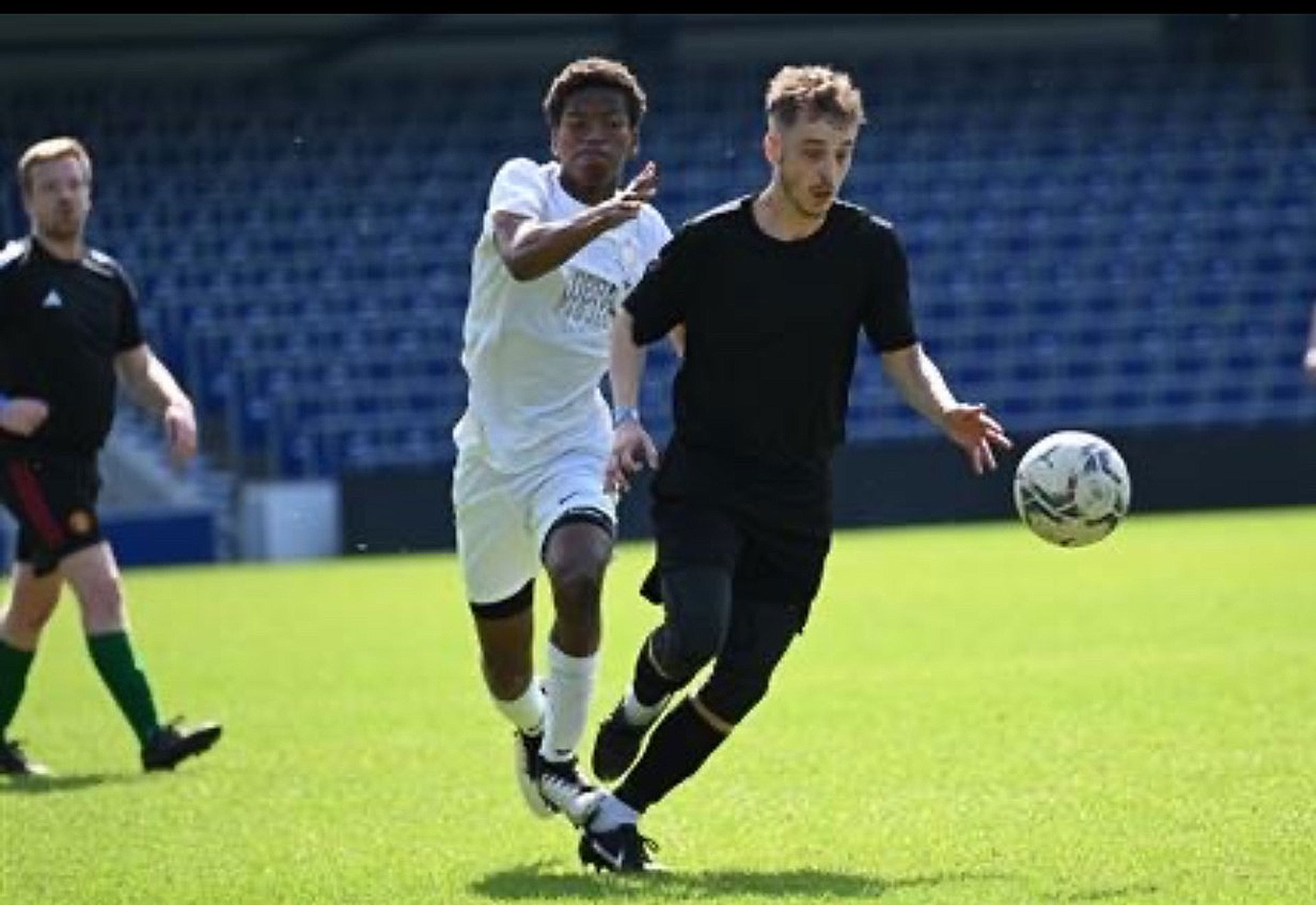
Jack Holden, 31, Surrey, was diagnosed with Juvenile Idiopathic Arthritis (JIA) in childhood which, at times, left him feeling isolated and fearful for his future. With age, he’s learned to listen to his body and to be more open about his condition. He now posts TikTok videos as UncleArthritis in a bid to reach other young people with arthritis, building a community that is mutually understanding, supportive and inspirational.
"I was just four when Mum noticed a large cyst at the back of one knee. The GP referred me to Kingston Hospital where they initially diagnosed a Baker cyst which needed regular draining and, potentially, surgery to remove it. Then, one doctor suggested Juvenile Idiopathic Arthritis (JIA), an autoimmune disease that was attacking the cartilage in my joints. I was referred to Great Ormond Street Hospital (GOSH) where tests confirmed it."
"I spent a lot of time at GOSH having my joints drained but it was just my normality and they looked after me so well, made me feel special. As a kid, you have that joy of being less self-aware."
Struggling with flare ups at school
"I did miss a lot of school because I had to go for rehab two weeks at a time, physical therapy at GOSH to keep the muscle strong around my joints. I’d still have flare ups though which I remember making me feel quite ashamed. I’d be playing football one day then debilitated the next, struggling to walk, so kids would assume I was faking it which was hurtful. It didn’t impact my education though, I did well because I studied at home but constantly not being at school made it hard to fit in."
"The teenage years were even more challenging. I’d always been scared to ask doctors questions but Googled and seen severe pictures which left me very anxious and believing that, by 25, I’d be crippled or seriously deformed. I did talk to family and friends but it’s hard for someone without arthritis to understand."
"Arthritis is a pretty invisible condition and that’s hard because people don’t always understand."
A second diagnosis
"There is a chance JIA can fade when you hit puberty and, at 13, I went into remission for six months but then had a major flare up and was classed as having rheumatoid arthritis which was stressful and scary. I went off the rails for a few years, rebellious, determined to make the most of life because I was convinced life as I knew it would be over by 30. I played lots of sports, drank, stupid teen stuff and, as a result, my condition got worse."
"I’d been on methotrexate which made me so ill I’d hide the tablets rather than take them but, luckily, I was put on trial meds at 16, a biologic that worked miracles in easing the pain and keeping flare ups at bay."
"I was told not to do contact sports and that was tough because I’m massively into football but had to give up playing at a decent level when I was 18. I did try and go back to it four years ago when my condition was in a good place and the match was fine but I couldn’t walk the next day and the price just wasn’t worth it. Now, I stick to a gentle kickaround with my nephews."
"Arthritis currently affects the joints in my ankle, knee, hip, shoulder, elbow, wrist and jaw, predominantly on my right side, and it’s frustrating because there’s usually at least one joint playing up. There are times when getting from the kitchen to the bedroom feels like climbing Everest but I’ve learned to work with my body rather than fighting it."
Preventing joint damage through healthy living
"Nine months ago, I was put on another biologic and I’ve had steroids too but I’m still in pain but the biggest thing, for me, has been getting used to having joint damage. The hospital is prioritising one joint at a time and I’m doing everything I can, swimming, eating well and listening to my body."
"Keeping active is the priority for me and I’ve found ways to do that, I swim and use the sauna which really helps. Diet is also a massive factor, certain foods trigger inflammation so I tend to avoid dairy and sugar. It’s also important to have a good relationship with your Rheumatologist, transitioning from GOSH to adolescent and then adult hospitals was challenging but I’ve learned to advocate for myself more. You really do have to take responsibility for your own health and that’s difficult going from being a child where it’s all done for you."
"I’ve always been quite private about my condition, mostly because I don’t want people to see me differently, but as I get older I feel more able to talk about it."
UncleArthritis is born
"Eighteen months ago, I did a few TikTok video on a whim, talking about my experience, but it didn’t seem to gain much traction. Then I hit a stage where I was pretty depressed, 31 with joint damage and arthritis everywhere. I went back on TikTok and found messages asking for more videos. It almost became a video diary for me and helped me mentally. That’s the hardest part: the pain I can deal with but the mental side is difficult and reaching out to other people helped a lot because only other people with arthritis really understand."
"People started to like, share and comment and, for me, hearing from others with arthritis at a similar age to me felt almost like being part of a community. I encouraged them to share their stories because the real goal is getting the message out to young people, that with medication and by keeping yourself healthy, it is possible to lead a reasonably normal life."
"That’s why Arthritis UK’s work is so important, in spreading awareness because we need more understanding. It’s not just an elderly person’s disease and, just because you look okay doesn’t mean you’re not in extreme pain."
"Arthritis UK’s work is so important, in spreading awareness because we need more understanding. It’s not just an elderly person’s disease."
"We need to support young people, encourage them to get checked and, if diagnosed, to get on top of the condition, to know that you can manage arthritis. I’d tell any young person that, as scary as this condition can be, you still have a life worth living. There’s plenty of amazing treatment out there. I really didn’t believe that, at 31, I’d be capable of all the things I am."
Find out more about
-
The reality of living with rheumatoid arthritis – Matilda's story
Matilda was diagnosed with rheumatoid arthritis when she was 23, after experiencing symptoms for three years.
-
Methotrexate
Methotrexate is a disease-modifying anti-rheumatic drug (DMARD) that reduces the activity of the immune system.
-
Rheumatoid arthritis (RA)
Rheumatoid arthritis is an auto-immune condition that causes pain, swelling and stiffness in the joints. Commonly affecting the hands, feet and wrists.